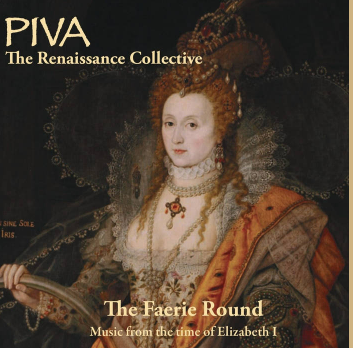
This is my first review of 2026, and what an interesting place to start! I think I got this one by virtue of my fun piece this month of the Six Queens of Henry VIII and their (possible) modern musical tastes were they around today. I do thank you for some lovely feedback on that little piece, I will link it at the end should anyone like a dip in!
I will say regarding this review that I love history, especially Tudor court history (which led to my little piece on “Six”) but I am not an academic expert on renaissance music and cannot come to this academically and say anything really intelligent about its authenticity etc. However, I do approach it as a music lover, someone who likes reenactments and dressing up in my Tudor dress, Anne Boleyn cosplay here I come!
Therefore my review will address whether this transported me back in time and whether I enjoyed the listen!
I will share some press information first for this album that is available to stream on Bandcamp and is also available as a physical CD sale.
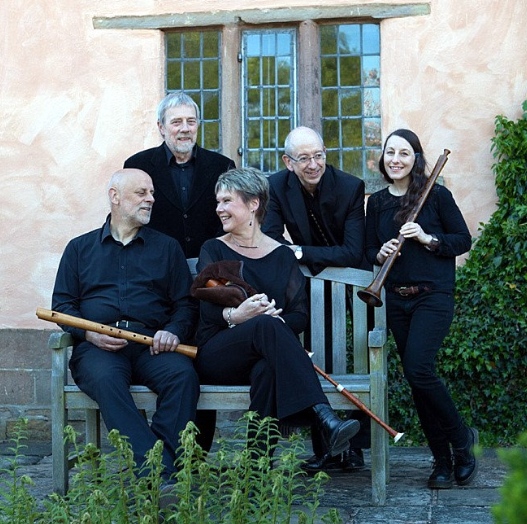
My press info: PIVA is a leading UK early music ensemble specializing in late Renaissance dance and ballad repertoire, using period instruments and energetic arrangements. The members of PIVA – the Renaissance Collective have wide and diverse musical backgrounds and between them they have experience in playing renaissance, classical, baroque, folk and roots music. They bring all of these diverse musical influences together and fuse them with their knowledge of renaissance music and instruments. The result is a cohesive approach and attitude towards the renaissance repertoire: PIVA’s aim is to be faithful to the music of the period whilst adding their own innovative arrangements and interpretations.
PIVA are:
Eric Moulder (Director of Music)
Jane Moulder (who helped us here at the magazine on a 2024 editorial we did on Anne Boleyn and her musical/dance ability)
Jude Rees
David Jarratt-Knock
Tony Millyard
For this album the group returns to further explore the English repertoire of late Elizabethan England. The Faerie Round is PIVA’s homage to Queen Elizabeth I and it features all the usual hallmarks of the band – from the quiet and contemplative to the rousing and stirring! PIVA is one of the UK’s leading early music ensembles and they specialize in dance and ballad music of the late renaissance. Playing an array of period instruments, they’re known for their innovative and energetic arrangements. Multi-instrumentalists, with backgrounds in renaissance, classical and roots music, they combine their influences to create music of the past played for today.
My review:
I’m looking forward to reviewing such an interesting array of instruments, taking me away from my narrow focus on the guitar/drums of modern music. I am interested in the hurdy gurdy (love the name, and did you know it was depicted by Hieronymus Bosch in the painting of ‘Garden of Earthly Delights’ that I saw in Madrid? – mind you, on looking again he also places in the same picture a recorder in a place it really should not be lol). Anyway…musically, my knowledge of Elizabethan music comes largely from Shakespeare where I do like the peddler from Winter’s Tale (a “picker up of unconsidered trifles”) with his jaunty songs. Songs like “Come Away Death” from “Twelfth Night” have a beauty to them as well, but I always imagine a younger Elizabeth being like her mother and enjoying a dance. So with that in mind, I pick up my headphones and prepare to enter Elizabethan times.
“Quodling’s Delight” – Anon (mixed consort)
This opener reminds me of a dance number where the partners circle each other that I have seen in films like Elizabeth. It is one of those where the couples look eye to eye and there is a sense of danger in the moves and touches.
“Gray’s Inn the First and Gray’s Inn the Second” – John Coperario (mixed consort)
An unusual title, and a track very of its time, at the risk of stating the obvious! I believe this was actually 17th century and connected to masques, but it is a piece I could envisage listening to with a small ensemble around the late night fire.
“The Jewes Dance” – Richard Nicholson (mixed consort)
This is a late Elizabethan piece. I liked it, it would make for good listening while you were having a late night glass of wine and relaxing. It is a piece that steps nicely forward and keeps an uplifting tone for the album.
“Farewell my good 1, for ever” – Christopher Tye (Recorders and viol)
I forget how old an instrument the recorder is. This is a piece that drifts. It is one of those pieces that has a positive step and slots neatly into the album. At 1.48 it definitely does not outstay its welcome.
“The Leaves be Green” (The Browning Fantasy) – Clement Woodcock (recorders)
We have recorders that again take me to a warm Summers evening by the stream. You can imagine the great sitting there with some food while the world drifts by and the music plays.
“Fortune my Foe” – Anon (crumhorns)
I would describe this as atmospheric and a little different. It has that jaunty step again, a confident and simple piece. I am sure it would lend itself to a dance, one for playing in the ladies quarters with a sneaked in late night musician perhaps lol (we need to ask Catherine Howard about that).
“Mr Giles Hobies Galliard” – John Dowland (mixed consort)
A Gilliard was a dance type popular at the time, it dates from the very twilight of the Elizabethan era. To me it sounds like the type of song that the court would enter a room to. A less intimate sound, more an occasion piece perhaps.
“Paul’s Steeple” – Anon (recorders and strings)
The introduction of strings gave this one the feel of something more soulful and dreamy but with a chorus that picked up a positive vibe. I liked this one a lot actually, it made me feel quite happy and I returned later to listen to it again.
“Wanton and The Widow’s Mite” – Anthony Holborne (mixed consort)
This is a faster number, it is a holiday infused piece, and I could see rich and poor alike getting up to sway along to the track. It certainly takes you back in the day.
“De la Tromba Pavin” – Richard Allison (shawms)
This one has a more regal feel to it. Before the era of the oboe, the shawm ruled! It is a conical bore, double-reed woodwind instrument made in Europe from the 13th or possibly 12th century and is played here to good effect.
“Almayne 56” – Anthony Holborne (bagpipes)
Bagpipes are up next. I am no expert on bagpipes, but this track does show them off and is an easy enough listen. It has a pleasing melody and would work happily as music accompanying a Shakespeare comedy played in the Summer park I think.
“The Earl of Oxford’s Galliard” – William Byrd (shawms)
This one is 100% what I imagine Elizabeth I dancing to. There is a picture of her being held high by the Earl of Leicester and this is exactly the type of music I always think of her enjoying. So there you go, and here it is!
“The Faerie Round” – Anthony Holborne (mixed consort)
Music for the Faerie folk comes up next. This one I feel leans toward the medieval, it takes me toward green forests and simpler times.
“Kemp’s Jigs” – Anon & John Playford (mixed consort)
This was a bit slower than the title suggested, a thought a jig was livelier? However, it picks up with a mid section chorus and is very listenable. I would put this into an intimate group scene.
“Pavane 39 and Galliard 38” – Anthony Holborne (Crumhorns)
This one slips nicely into the late part of the album that is to come. The track was not one of those that grabbed my attention, but it was entirely period and I will note how the production throughout the album allows for real clarity and crisp sound.
“My Lord of Oxford’s Galliard” – Anon (recorders and viol)
We return to the Lord of Oxford and recorders. Like so many of the tracks it has that lightness of Spring and Summer in its step. The recorders show a depth that I was unaware that they had.
“Prince Edward’s Paven and The Queine of Ingland’s Paven” – Anon (recorders)
This is an intimate track and there is a very gentle peace about it. A paven was a dignified slow dance and Pavan music often served as an introduction or prelude to a faster, more lively dance, such as the galliard. It’s kind of an archaic word now.
“Nutmegs and Ginger” – Anon (mixed consort)
I was happy with this little track, I liked the title too! The music seemed to echo itself and play with melody.
“Monsieur’s Alman” – William Byrd (shawms)
Introduces a courtly feel to the music, maybe from France given the title! It retains the period feel without grabbing my attention as much as some of the earlier tracks did.
“Hackney” – Clement Woodcock (shawms)
Is a pleasant listen, I would suggest a late album track that has a confident polish and mood.
“La Doune Cella and La Bounette” – (bagpipes, shawms, hurdy gurdy)
At 6.15 this is the longest track on the album by some margin.It sounds more like a soundtrack for Macbeth. This would happily be the background for Macbeth and Banquo as they approach those witches on the blasted heath.
*
On this instrumental only album we have over an hour of music that takes us back to a different world, we fall down the rabbit hole and arrive in a world lit by fire alone. In summary, I will return to my opening point on whether this transported me back in time and whether I enjoyed the listen! Ultimately, The Faerie Round succeeds precisely on its own terms. I may not be approaching this as an academic specialist in Renaissance music, but as a listener, a lover of history, and someone who enjoys being imaginatively transported, this album absolutely does what it sets out to do. Over the course of its generous runtime, PIVA create a richly textured sound world that feels lived-in, atmospheric, and deeply evocative. From intimate recorder-led moments to rousing consort pieces, the album consistently conjures images of candlelit halls, courtly dances, green forests and late-night gatherings by the fire. It’s music that invites you not just to listen, but to step inside another time — and for me, that makes “The Faerie Round” an immersive, enjoyable, and quietly enchanting start to my 2026 reviewing year.
Love what we do? Rock the Joint Magazine is completely free — no paywalls, no ads ruining the vibe — just passionate music journalism for 1,000+ readers a day. If you enjoy hanging out with us, please consider hitting the “Support Us” button and buying us a coffee on Ko-Fi. Even a small donation genuinely helps keep the magazine running, lets us publish more features, and reminds us that people value independent music writing.
Artist website here
Stream and buy music from PIVA here
By Anna-Louise Burgess