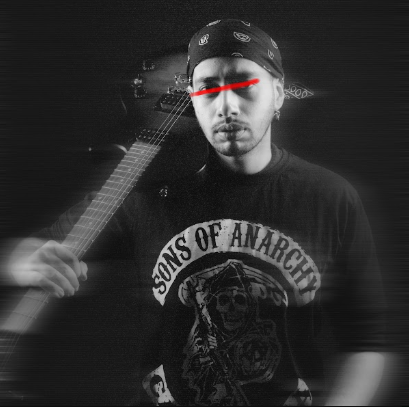
Edinburgh-based artist Hossein Paeizi discusses protest, underground music in Iran and the fusion of Persian classical music with alternative metal in this in-depth interview and EP review.
This is me around midnight with a late night cup of tea. All the house is sleeping, the cat has gone off in a huff because we were late back and he feels neglected and underfed – and the night is warm tonight around the witching hour. This feature is interesting as it delves a little beyond music as entertainment alone. Let us remember as we slip into the sofa and listen to whatever we want, dance how we choose and sing loudly as we boil the breakfast eggs that these freedoms are not universally enjoyed. We have many times raised awareness in any way we can of the plight of musicians imprisoned, or even under threat of death, for the supposed crime of simply making music. As a Christian my favourite saint is St. Jude, the patron saint of lost causes, with him no cause is truly lost – and I believe that as humans we always retain hope until the very end.
What I am doing today is talking to Hossein Paeizi and then reviewing the new EP.
I will turn to the press release first:
Edinburgh-based fusion band Paeizi, led by Iranian musician Hossein Paeizi, will release their debut EP on 28 May — a project merging metal with Iranian classical music, shaped by years of research and the political realities of contemporary Iran.
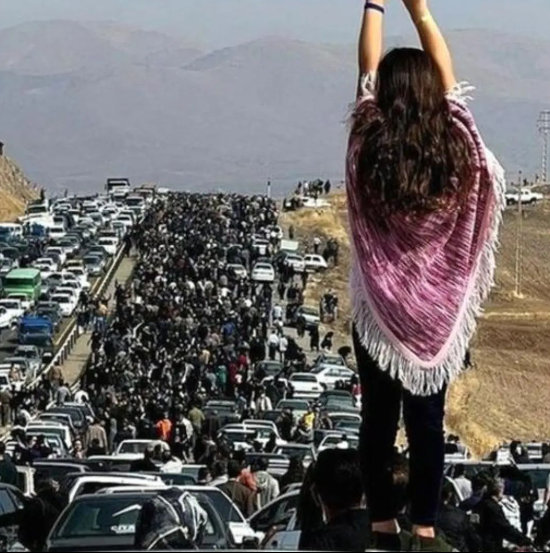
Developed during Hossein’s Master’s studies in music after relocating from Tehran to Edinburgh, the self-titled EP channels grief, resistance, and cultural identity through a sound that fuses heavy alternative music with Persian musical traditions. Written in the aftermath of the protests following the death of Mahsa Amini, the EP aims to tell the story of the recent protests in Iran and give voice to those living through internet blackouts and state repression.
Through its fusion of Persian musical traditions and heavy alternative music, the project serves both as a form of resistance and as an attempt to immortalise the grief, anger, and defiance surrounding the movement.
Across its five tracks, PAEIZI moves between Iranian classical melodic structures and the intensity of heavy music. Songs such as Hesar and Mansouri combine Persian compositional forms with post-grunge and metal influences, while Salamaleykom and Simorgh remain deeply rooted in Iranian classical musical language. Mamad reinterprets themes from a pro-regime Iran–Iraq War song, reshaping them into a critique of state violence and internal repression.
The project was produced in collaboration with Iranian musician and scholar Soroosh Ghahremanloo and Iranian classical music professor Mostafa Janlou. Drum tracks were recorded at Edinburgh Napier University with recording engineer Theo Black and drummer Amy Matthews. The EP features lyrics in both English and Farsi and was written, mixed, and mastered by Hossein Paeizi.”
With the scene set, here is our interview:
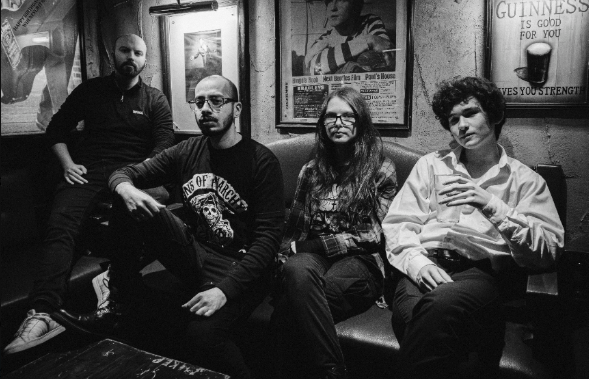
Please briefly introduce each band member and say what they do!
Hossein: Paeizi is built around a fairly traditional four-piece rock band setup, but the way we approach our roles is very fluid and collaborative.
I handle vocals, electric guitar, songwriting, production, recording, occasional mixing, and lyric writing. Mike Miller plays electric guitar, contributes backing vocals, and is also involved in songwriting. Sophie Imrie plays bass and has been incredibly important on the visual and creative side of the band as well, helping design merchandise, stickers, and different creative marketing ideas. And finally Bryan Finley James is our drummer.
When it comes to guitars, we do not really follow the traditional “lead vs rhythm guitarist” structure. The musical concepts constantly shift between us depending on what the song needs, so both guitars move between melodic, rhythmic, and atmospheric roles throughout the music. It is a very collaborative process, which is a huge part of the band’s identity.
Gorbachev once credited the smuggling of music by The Beatles into the USSR as one reason for the break down of control from the regime at the time. Your press notes involvement with the underground rock and metal movement in Iran, and with the internet we guess access to western music is possible (pre internet blackout at least). How underground does the rock scene have to be in Iran?
Hossein: Thanks for asking this question. To answer it properly, we have to go back to before the Islamic Revolution. Rock music was hugely popular in Iran. Artists like Elvis Presley and The Beatles were loved, and later bands like Metallica and the whole grunge movement became very influential among younger generations. You can still hear rock and alternative influences in the works of Iranian musicians such as Farhad Mehrad and Kourosh Yaghmaei.
After the revolution, many forms of music were restricted, especially rock and metal, as they became associated with western culture and even satanism by the regime. Because of this, the alternative music scene was pushed underground. To paint a clearer picture, imagine forming a band while knowing you cannot officially release your music, perform publicly, or exist within the conventional music industry. Musicians faced the risk of arrest, imprisonment, and severe punishment, but they made music anyway.
Bands would record songs, duplicate cassettes or CDs by hand, and distribute them among friends and fans. Occasionally, they organised secret private performances. Bands like Kahtmayan and Arsames became symbols of that resistance.
The underground scene in Iran is not just about music — it is a lifestyle built around resistance, identity, and refusing to become what an authoritarian regime wants you to be. And despite everything, it is still thriving.
Music fusion can truly open doors. I am thinking of George Harrison bringing the Indian sitar into the music of The Beatles, for example. Or how Indian Bollywood fuses western dance with Indian rhythm. Persian classical and western hard rock…how neat a fit did that turn out to be?
Hossein: Yeah, those are great examples. To be fair, Iranian classical music and certain tropes within metal actually have a lot in common, both in terms of message and musicality. Metal music, especially the grunge and post-grunge movements that I grew up with, has always pushed back against the mainstream. Even though grunge is not technically metal, I see it all as part of a broader alternative culture rooted in resistance and authenticity. Similarly, Iranian classical music has also carried a sense of resistance throughout history.
After Islam became the dominant religion in Iran and music became increasingly suppressed by different rulers over the last few centuries, preserving and performing this music became an act of cultural survival in itself. That is where I see a strong commonality in message.
The other side of it is the sound itself. Iranian classical music creates a very specific emotional soundscape that is difficult to explain with words, but people can feel it immediately. A big part of my master’s research at Edinburgh Napier University was exploring how that atmosphere is created and how it could be translated into a heavier musical language.
Technically speaking, Iranian classical music in its traditional form is largely monophonic, and interestingly that connects very naturally with riff-based metal music. Bands like Metallica or Lamb of God often build intensity around strong melodic and rhythmic unison ideas, which is conceptually very close to aspects of Iranian classical composition. My approach was to embrace those commonalities rather than force two unrelated genres together, and through that create what I call Iranian sonic spaces within metal music.
Due to circumstances, the EP is political in its intent. But music is often political – John Lennon’s “Power to the People” “Blowin’ in the Wind” by Bob Dylan, “A Change Is Gonna Come” by Sam Cooke, “What’s Going On” by Marvin Gaye, and “Killing in the Name” by Rage Against the Machine to name a few. Do you feel music has a duty to raise awareness as much as it has a duty to entertain?
Hossein: I think music as a way of sharing emotion goes beyond the dichotomy of entertainment versus delivering a clear political message. As Rick Rubin once said, music is an invitation into what the artist was feeling during a particular moment in time. That is how I have always approached it — just honestly expressing what I felt.
With this EP, the political aspect was unavoidable because of the circumstances surrounding it. I was writing these songs while the massacres and protests in Iran were unfolding, and honestly, I have never experienced grief, rage, hatred, and helplessness on that level before in my life. The emotions were immediate and real, and the music became a reflection of that.
The lyrics for “Mamad,” for example, were written in the aftermath of the killing of Mahsa Amini. At that point, I was not thinking about whether the music had a duty to entertain or educate. I was simply trying to process emotions that were impossible to contain any other way.
If music raises awareness and creates connection at the same time, then I think that is one of the most powerful things art can do.
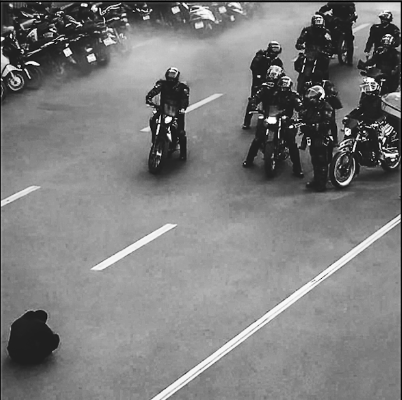
Let’s go to the opener “Simorgh” – maybe it is autoassociation due to the accompanying image of the protester and the motorbike, but, to me, it felt like a musical swarm, layered over the drum beat – how did you set about getting this one right and what part of the story does it tell?
Hossein: “Simorgh,” which translates to the phoenix — the bird that rises from the ashes — was also the call sign of Ahmad Keshvari, one of the most respected Iranian pilots during the Iran–Iraq war. Growing up in Iran, I was surrounded by stories of those soldiers and watched many of the TV series and documentaries made about them. Parts of this track were actually inspired by the theme music of one of those series, because it captured the atmosphere of the Chahārgāh dastgāh ( an Iranian modal system) beautifully while also carrying this sense of battlefield chaos within it.
The reason I chose “Simorgh” as the opener, alongside that artwork, was because it completely reflected how I felt during the protests in Iran. The sound of police motorbikes rushing through the streets to intimidate protesters, gunfire, smoke grenades, panic, chaos — all of that emotional atmosphere became embedded into the track. So while the song references older memories of war, for me it also became connected to a modern form of conflict happening in the streets.
Musically, it is probably one of the more progressive tracks on the EP. It begins with a rhythmic displacement between the guitar parts and the drums, creating a feeling of instability and tension from the very start. As the song develops, the rhythm guitar starts incorporating Iranian rhythmic cycles to further emphasise that disorientation, while the lead guitar carries the emotional and dramatic narrative almost like a voice telling the story of war and resistance.
In folk and country traditions narrative storytelling is a very important aspect of the genre – possibly less so in hard rock. Do you feel Hesar, which to me was a dark rock ballad/lament connects into the dark folk music strand and what was the process behind writing that track?
Hossein: “Hesar” is probably the darkest track on the EP, and honestly the darkest piece of music I have ever written. The song is essentially a snapshot of grief and revenge existing at the same time. It imagines the families of the protesters especially mothers, dancing on the graves of their children, not out of happiness, but as a celebration of the sacrifice they made for the freedom of their country. At the same time, it also paints the image of an entire nation celebrating the downfall of its oppressors, almost dancing on the graves of its enemies as an act of revenge and release.
The word “Hesar” in Farsi means “cage,” and musically the track is built around a variation of the Chahārgāh that creates this intense feeling of entrapment. It feels trapped between a small number of notes, constantly pulling against itself without ever fully resolving. That tension and lack of release was very important to me emotionally, because it reflects the psychological state behind the song.
In terms of the fusion itself, “Hesar” works differently from tracks like “Simorgh” or “Salamaleykom.” Those songs try to integrate Iranian classical music and metal into a single musical language, whereas “Hesar” intentionally alternates between the two worlds. The intro and verses are deeply rooted in Iranian classical music and atmosphere, while the choruses shift into a much more direct, power-chord-driven hard rock sound. That contrast between fragility and aggression became the identity of the track, and I think that dual character is what gives it such a distinctive emotional weight.
These last questions are on a lighter vein! What plans can you share with us for the rest of 2026 for the band.
Hossein: As of now, we are already working on our second EP and have finished recording a couple of songs for it. Compared to the first release, this one is much more focused on personal stories and carries a higher-energy sound overall. The political and cultural themes are still part of our identity, but this project explores a more personal and emotional side of the band as well.
Alongside that, we are also very proud to be co-founders of a live music event called “The Movement,” which is focused on supporting and promoting Scotland’s alternative music scene. The goal is to create a platform for talented underground and emerging acts, so we are not only performing ourselves but also helping organise and promote these events and build a stronger community around alternative music in Scotland.
What hidden talents does each band member have? Does someone juggle, cook amazingly etc?!
Hossein: To be honest, one of the most interesting things about this band is how diverse it is. Bryan is American, Sophoes is Scottish, and Mike is English, so we all come from very different backgrounds and experiences.
I think the most important talent we share is empathy and the ability to genuinely understand one another despite all the propaganda and division that exists in the world. That human connection is a huge part of why the band works creatively.
Beyond that, all of the members are singer-songwriters and have their own creative projects outside the band as well, which brings a lot of different influences into the music.
And on a lighter note, Mike can probably give you the most detailed recommendations possible on which theme parks to visit and which rollercoasters to ride. it is both his obsession and, to be fair, basically his day job at this point.
Fun Question -It is a hard winter’s night. The tour van/bus has broken down and a harsh wind blows through the night. Nearby you see a small house, it seems abandoned, yet there is a fire burning, food on the table and working electricity. While you wait for morning – what book and what film will get you through the night?
Hossein: We have actually had quite a few fun movie nights together as a band and with close friends, so realistically we would probably end up putting on a comedy film just to keep the mood alive while everything outside looks like a horror movie scene.
There would also definitely be a fair amount of doomscrolling involved while pretending not to panic about the van.
As for a book, I would probably go with “The Creative Act: A Way of Being” by Rick Rubin. I am genuinely obsessed with that book because it approaches creativity as something deeply human and emotional rather than technical, and I always find myself going back to it.
PAEIZI, the EP review.
The EP is out on May 28, 2026.
“Simorgh” opens the EP with a layered instrumental. It reminded me of this angry collection of motorbikes revving, the guitar riffs sitting over the bass – a percussive pulse that feels both tribal and ceremonial. It is an integration of Iranian instruments with a western grungy metal – a strong kick to open on.
“Salamaleykom” is a bit harder than the opener, more angst in the grind – a touch of Gothic metal and an urban feel. Musically it walks me through the ruins and (as Gene Simmons says) it asks me to place my faith in a loud guitar. Mid-track it breaks to more meditative moments, fusing emotion and sound waves in the montage.
“Mansouri” brings in vocals for the first time to the EP, distant and emotive, connecting to the cries of a people. It walks us through the storm with a gun style riff in one hand and a taste of freedom in the air, ever there but somehow distant.
“Hesar” is tenebrous in this dark folk style. The music covers us as a veil and the softer vocals connect into this sense of urban noir. The tale of life, Macbeth says, is a tale told by an idiot, full of sound and fury…artists like PAEZI are directing their pain and fury for a people – have a listen!
“Mamad” closes the EP down with a song of shadows. The fusion is more a grunge influenced track mixed with vocal imagery and guitars turned down a touch. It reminded me a little of the Kiss album “Carnival of Souls” – interesting, the black coffee track to finish up with.
PAEIZI is not simply an experiment in musical fusion; it is the sound of memory, displacement, anger and hope colliding through amplifiers and Persian melody. This is an EP that asks listeners to do more than consume music casually in the background — it asks us to feel something. In a world where many artists chase algorithms and trends, Hossein Paeizi and his band instead choose honesty, identity and resistance. That makes this release not only interesting, but important.
Love what we do? Rock the Joint Magazine is completely free — no paywalls, no ads ruining the read — just passionate music journalism for 1,000+ readers a day. If you enjoy hanging out with us, please consider hitting the “Support Us” button and buying us a coffee on Ko-Fi. Even a small donation genuinely helps keep the magazine running, lets us publish more features, and reminds us that people value independent music writing. Remember, we work hard for you here!
Follow PAEIZI on Instagram here
By Anna-Louise Burgess
&
Mark C. Chambers
Join Rock the Joint Magazine on the road to the best independent music journalism, interviews and reviews. We cover Rock, Country, Jazz, Blues and Christian music. Support us on Ko-Fi (link on each page) to help the magazine grow and value independent journalism.