In a world of algorithms, the magazine’s Instagram gets a range of ‘suggested’ music from a large number of artists drifting by. I often dip in and, if something catches my eye, I follow through and have a proper listen. Sometimes that leads to me reaching out to say hello.
In this case, the cinematic, dystopian sound—combined with a bohemian image and grungy vibe—drew me in. I’m going to share the interview we did with the duo first, as that sets the scene nicely… and then on to my review.
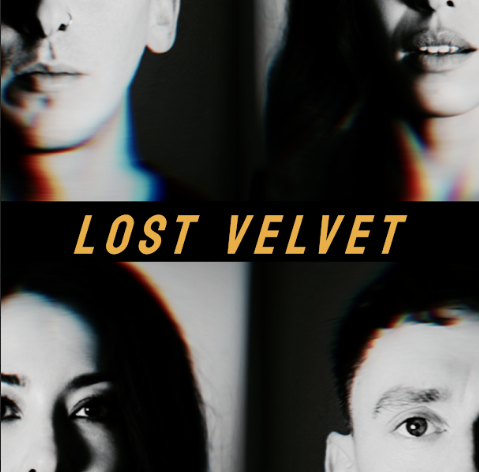
Lost Velvet are based in the UK and are composed of Robert Butcher (multi-instrumentalist) and Melissa Morris (vocals).
The Interview:
For anyone coming fairly new to you and your music, such as we did, finding you on an Instagram algorithm – can you tell us a bit about yourselves? Your music is described as cinematic – you agree with that?
Rob: I would definitely agree with our music being defined as cinematic. We are heavily influenced by cinema and movie scores tend to share modes and scales often overlooked in rock songwriting. Composers such as Thomas Newman, Danny Elfman, James Newton Howard, James Horner and Hans Zimmer are as important as rock acts like Radiohead, Jeff Buckley, Muse or Deftones to me when writing for Lost Velvet. We have often referred to David Lynch’s towering influence over our work. Both visually and aurally. Angelo Badalamenti (Lynch’s long-time collaborator) is a huge influence, too.
“Burnt” is slow and hypnotic, in a musical buffet it is a touch of film noir, with the Seattle sound and a tiny dash of “Dear Prudence!” Is this single representative of the direction you are taking now?
Rob: I wouldn’t say any one track defines our direction. Burnt leans into certain textures we haven’t explored elsewhere, but every track starts from a blank canvas. What ties them together is the intention to tap into the psyche, with a nod to the past, but pulled into a more unfamiliar space, creating a feeling of nostalgia that doesn’t quite settle.
Mel: Each track has its own feel, you can hear that across the EP and recent singles, but they all carry the same Lost Velvet undercurrent. It’s that blend of a driving foundation with layered guitars and vocals drifting above, a little doom, a little shimmer, a little haze.
Your sound on, for example, “Endless” is very layered, full of texture. But, I would think, this would make it tricky to take to a live show – do you strip back to acoustic for live performance?
Rob: We play live as a four-piece with guitar, bass, drums and vocals. Our bassist and drummer bring their own feel to the songs, which naturally shifts things and adds a different kind of energy. We do have some sounds on track to support certain layers, but it’s really about dynamics, knowing when to let things breathe and when to push.
Mel: It’s still early days for us live and we’re shaping what that looks like, but after our recent show at Folklore in London, the feedback made us feel like the energy is already there. There’s definitely more to come as we refine it. We’re also open to exploring more stripped-back or acoustic moments, to lean further into the contrast between the introspective and the more cinematic sides of what we do.
Keeping with “Wasted” the video blends in the visuals of the road with the words, numbers etc flicking by – was the concept for the video yours or did you pull from outside the band for the visual concept?
Mel: Quite often when we choose a single, it’s because the track already carries the visual world within it. We usually begin with a moodboard of colours, textures, landscapes and fragments of words, then work out how to realise that vision on a realistic budget. We film as much as we can ourselves, and collaborate with photographers to help shape the scenes and capture additional content. With “Wasted,” we wanted to nod to the open desert road and that slightly apocalyptic sense of emptiness, something loosely inspired by the atmosphere of Red Rock West. We started by projecting imagery onto ourselves, which naturally evolved into projecting lyrics across the body, blurring the line between the physical and the internal. Once everything is shot, I tend to step back and piece it together instinctively, letting the footage guide how it should exist.
I see you as a band connected to technology and its use – I may, of course, be wrong! Where are you on the topic of AI in music to assist with various aspects of it? Just as a note, from our perspective we never use AI in writing, we feel that is unethical, and also we are capable of writing! However, we find it extremely useful on the art creation side for promotionals, logo, merchandise etc.
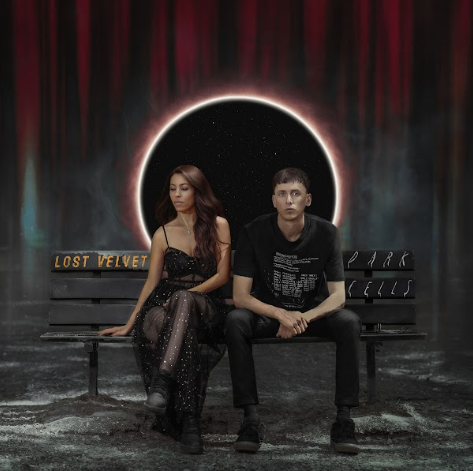
Mel: It’s a really interesting space, and we understand why people are drawn to it. Early on, AI felt like it opened up endless possibilities, especially visually. When we explored it for our music videos, though, it started to feel disconnected from what we actually value creatively. For us, the core of what we do has to come from a human place. We’ve tried different approaches, including AI and stock footage where needed, but we’re most comfortable when everything feels authored by us, even if it’s rougher or more restrained. There’s something important in building a world slowly, piece by piece, rather than generating it instantly. That said, we do see the benefits of AI in other areas. It’s useful behind the scenes, helping guide an album rollout, generating radio lists, or navigating new tools. I’ve been using it to get to grips with new editing software, and it’s been incredibly helpful. We’re naturally drawn to that feeling of otherworldly or liminal space, and those visuals can sometimes look or feel like CGI or AI. That’s part of the appeal, but for us it’s important that they’re grounded in something real. That’s why working with photographer Natalia d’Ark has been so important to us. Her work can look AI at first glance, but it’s entirely handcrafted. She’s one of the most talented artists we’ve come across. The stars inside the portal on the album artwork were hand painted by Natalia, and every layer, every detail, even the smoke in the visuals, is created by hand. She’s a huge inspiration to us. Where we’ve landed is keeping the creative core human, while using technology as support rather than a substitute. Our next video reflects that shift, more stripped back, more intimate, and a clearer direction for us visually. One day we hope to have a bigger team to help bring our full vision to life across branding, content and video, but for now we’re working within our limitations and finding ways to make it happen ourselves.
What plans for 2026 can you share with us?
Mel: Our debut album comes out in 2026 – we are still in production stages, working with a really awesome team of Michael Patterson and Maor Appelbaum. We are lining up live shows and working towards getting our live lounge footage recorded. The aim is to take that momentum into 2027 and step onto the UK festival circuit. We would love to play ArcTanGent next year.
A fun question. It is late at night, and the tour bus breaks down. The wind is howling outside, and the rain is rushing down. A lonely cottage (with electricity) awaits, no one is inside. What book and what film will get you through the night?
Mel: We would probably put on a Lynch classic, or perhaps Twin Peaks season 3, that or anything with Nicolas Cage in it…(he cracks me up) – I know Rob has been wanting me to watch Mandy!
My Review:
“Burnt” is the new single—the track that pulled me into the duo. For me, it’s a haunting, gothy, Seattle-tinged soundtrack piece for a sci-fi dystopia. It’s full of layered instrumentation and drifting vocals, creating a montage of ideas that slowly pulls you under.
“Wasted” has over 41k listens on Spotify, indicative of how the duo have steadily built an audience. It vocally whispers while the sound builds into a wave that, like the tide, draws in and breathes out. I enjoyed the heavier guitar riff that enters mid-section; musically, the instruments lead while the vocals sit above as a haunting guide.
“Dark Cells” represents a shift in direction—it’s heavier, more grungy, leaning into horror territory. The track revolves around a haunting power riff. It’s interesting, perhaps less immediately accessible, but absolutely worth your time.
“Endless” is lighter and the most commercially accessible of the tracks I’ve heard. I could see this one finding a home on late-night radio. It still carries that dystopian edge, and the mid-track guitar work is particularly effective. The acoustic version is also well worth a listen—more stripped back, more dreamlike, and equally compelling.
In essence, this is music to explore rather than consume passively. It may not be immediate sing-along material, but it is thoughtfully constructed by artists with a clear vision and undeniable talent.
Perfect for those late-night listens when the world slows down and the mind starts to wander—Lost Velvet might just soundtrack your next descent into the in-between.
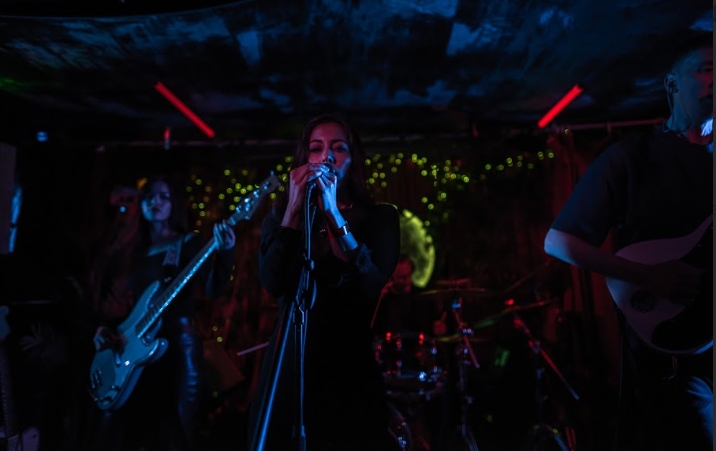
Photo Credit Natalia D’Ark
Love what we do? Rock the Joint Magazine is completely free — no paywalls, no ads ruining the read — just passionate music journalism for 1,000+ readers a day. If you enjoy hanging out with us, please consider hitting the “Support Us” button and buying us a coffee on Ko-Fi. Even a small donation genuinely helps keep the magazine running, lets us publish more features, and reminds us that people value independent music writing.
You can stream music from Lost Velvet here.
By Mark C. Chambers
and
Stevie Ritson (Review)
We have some great merchandise, please do check out and support independent journalism, it is on our site, or linked here
Sponsored Advert Link!
Earn £10-£50 immediately when you set up a Monzo Bank account and use your card!
https://join.monzo.com/c/1fqs1tw

https://join.monzo.com/c/1fqs1tw
JOIN ROCK THE JOINT MAGAZINE ON A JOURNEY FOR THE BEST IN INDEPENDENT MUSIC JOURNALISM – WE COVER ROCK, COUNTRY, JAZZ AND CHRISTIAN MUSIC. LEADING FEATURES, INTERVIEWS, REVIEWS AND EDITORIALS. SUPPORT US ON KO-FI.