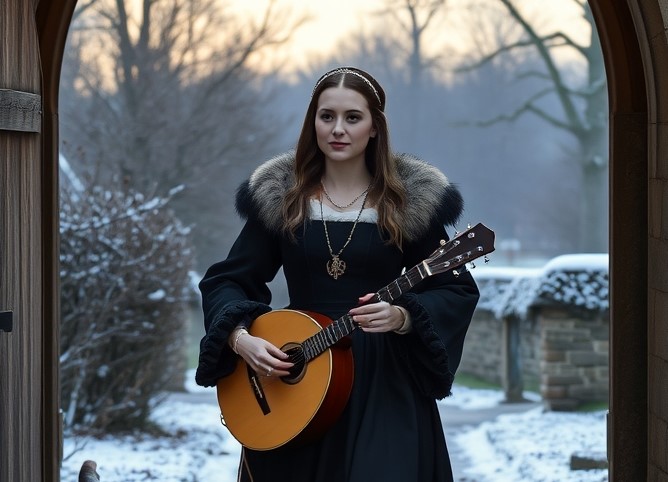
There’s something deeply satisfying about starting a new year with a piece that’s allowed to be a little bit strange. Rock the Joint has always thrived when writers are trusted to follow an idea wherever it leads, and Six the Musical feels like the perfect excuse to do exactly that.
Over Christmas, two gifts collided in my brain: the Six vinyl, which has barely left my turntable, and Gareth Russell’s Young, Damned and Fair, a compelling and humane biography of Catherine Howard. Between the two, I found myself thinking not just about how these Tudor queens are represented on stage, but about who they might be off it. What music might they choose for themselves today, away from propaganda, pageantry, and survival?
Six brilliantly reframes Henry VIII’s wives as pop icons, each owning her narrative through genre, attitude, and swagger. But history tells us these women were far more complex than any three-minute anthem allows. So consider this a playful thought experiment — part vinyl appreciation, part historical imagination — asking what each queen might actually be listening to in 2026.
Katherine of Aragon – “No Way”
Katherine of Aragon opens Six with one of its strongest songs. “No Way” is bold, defiant, and rhythmically sharp — a mission statement wrapped in a chorus. It channels Beyoncé-esque resilience and female self-belief, and it gives Katherine the commanding stage presence she deserves.
Yet musically, I suspect this would be very far from her personal listening tastes. Katherine was deeply devout, intensely private, and rooted in her Spanish Catholic faith. Anything overtly sexual or performative would likely leave her cold. Instead, I imagine her gravitating toward intimate, spiritually rich music — the kind experienced in small gatherings rather than public arenas.
Artists like Martín Valverde, with contemplative ballads such as “Nadie Te Ama Como Yo,” feel far more her speed. Marcela Gándara’s emotionally restrained worship songs “Supe Que Me Amabas” or “Dame Tus Ojos” would suit her reflective temperament, as would the poetic lyricism of Jesús Adrián Romero. For Katherine, music would be devotional, inward-looking, and quietly sustaining rather than declarative.
Six gives her a platform. Her real taste, I suspect, would be much quieter.
Anne Boleyn – “Don’t Lose Ur Head”
Anne Boleyn is where Six fully leans into pop culture provocation. “Don’t Lose Ur Head” is knowingly playful, borrowing heavily from Lily Allen’s cheeky cynicism and presenting Anne as flirtatious, irreverent, and socially disruptive.
Historically, Anne was all of those things — but she was also far more serious than the musical sometimes allows. She was highly educated, multilingual, politically alert, and fiercely protective of those she loved. Far from the caricature of a reckless seductress, Anne was self-contained and acutely aware of the dangers of court life. The charges against her — sexual immorality, incest, witchcraft — were almost certainly fabricated.
Anne was also profoundly musical. Contemporary sources repeatedly note her talent for singing, dancing, and playing multiple instruments. She didn’t merely consume culture; she shaped it. Like many figures who unsettle polite society, she lived slightly ahead of the curve.
If Anne were alive today, I suspect she’d embrace that same disruptive edge. Miley Cyrus feels like an obvious touchpoint — not just for shock value, but for the way she weaponises reinvention. Lily Allen’s biting commentary would resonate, and I can easily imagine Anne dipping into grunge-era Seattle sounds: music that resists polish and embraces raw emotion.
Dance would remain central. And yes — I think she’d secretly love “Ra Ra Rasputin,” if only for the chaos.

Jane Seymour – “Heart of Stone”
Jane Seymour’s Six moment comes via “Heart of Stone,” a power ballad that paints her as emotionally sincere and morally grounded. It’s a strong song, though history suggests Jane was anything but passive.
Jane knew precisely how to position herself against Anne Boleyn and how to appeal to Henry VIII’s shifting desires. She survived court politics by understanding them. Musically, I see her aligning with artists who balance emotional weight with mainstream appeal: Adele, Ed Sheeran, and even Cher — performers who project warmth while maintaining control.
Jane’s listening would be deliberate, polished, and emotionally calibrated.
Anne of Cleves – “Get Down”
Anne of Cleves’ Rihanna-influenced anthem is pure survival swagger. “Get Down” celebrates independence, self-worth, and walking away with the better deal — which, historically, Anne absolutely did.
Given that Anne never spoke English fluently, I imagine her gravitating toward music that prioritises atmosphere and feeling over lyrical complexity. Cabaret-era sounds from the 1920s make sense here, alongside modern German folk-pop artists like Deitsch or Andrea Berg. I can also see her enjoying contemporary jazz and blues — perhaps even someone like Chick Corea — music that rewards patience and subtlety.
Anne didn’t need the spotlight. She’d choose music that let her breathe.
Catherine Howard – “All You Wanna Do”
Catherine Howard’s song is often the emotional centre of Six. “All You Wanna Do” reframes her as a victim — young, exploited, and discarded — which aligns with modern sensibilities but simplifies a far more complicated reality.
Historical evidence suggests Catherine was often in control of her relationships: copying keys, arranging secret meetings, ending affairs on her own terms. She wasn’t highly educated, but she was socially astute, physically confident, and deeply fond of pleasure, dancing, and attention.
Musically, Six channels Britney Spears here, and that fits. Today, I can easily imagine Catherine loving Sabrina Carpenter, delighting in pop that mixes flirtation with self-awareness. She’d likely enjoy Ella Red (perhaps privately), indulge in nostalgic boy-band hits from the Backstreet Boys, and flirt with indie country-pop acts like First Time Flyers.
Of all the queens, Catherine would adapt most easily to modern life — social media, aesthetics, influence — fully aware of how charm can become currency.
Katherine Parr – “I Don’t Need Your Love”
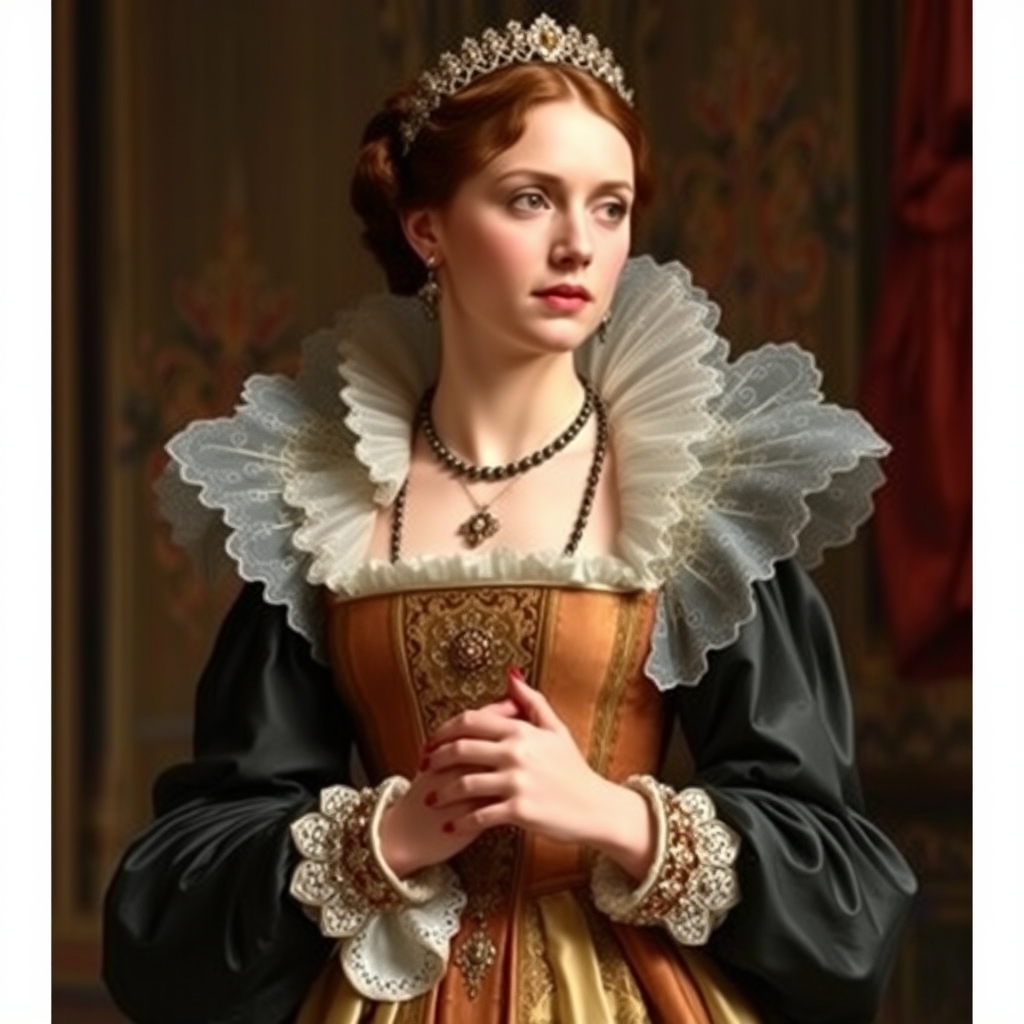
Katherine Parr closes Six with grace. Her Emeli Sandé–influenced ballad reflects intelligence, restraint, and survival rooted in conviction rather than passion. Historically, Katherine was deeply devout, intellectually serious, and committed to reform.
In today’s musical landscape, I see her drawn to thoughtful singer-songwriters and contemporary Christian artists who tell stories rather than chase spectacle. Robbie Harte, Josh Garrels, Carrie Underwood — musicians who blend faith, narrative, and authenticity.
Katherine Parr’s music would be communal but intimate: fireside performances rather than stadiums, ideas shared rather than shouted.
Final Notes
Six works because it hands these women microphones and lets them reclaim their stories through rhythm and noise. But imagining what they might listen to privately reminds us that identity is always more complex than performance.
These queens lived under extraordinary pressure, navigating belief, power, desire, and danger. Music — then as now — would have been a refuge, a weapon, and a mirror. Genres change. Instruments evolve. But the need to be heard, understood, and remembered does not. And perhaps that’s why Six sounds so good spinning on vinyl in 2026: history still has a beat, and these women are still setting the tempo.
Love what we do? Rock the Joint Magazine is completely free — no paywalls, no ads ruining the vibe — just passionate music journalism for 1,000+ readers a day. If you enjoy hanging out with us, please consider hitting the “Support Us” button and buying us a coffee on Ko-Fi. Even a small donation genuinely helps keep the magazine running, lets us publish more features, and reminds us that people value independent music writing.
By Anna-Louise Burgess