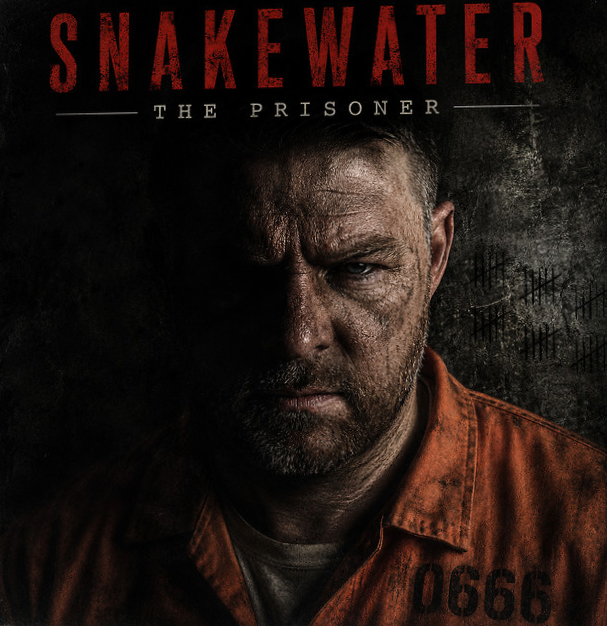
Eight years is a long time to go without new music, especially for a band that knows how to make a guitar do some talking. Manchester’s Snakewater released “Ain’t No More Room in Hell” in 2017 and followed it with a single in 2018, then largely disappeared from the release calendar. Now singer, guitarist and songwriter Bobby Grant has brought them back with “The Prisoner,” an independently released, ten-song album that runs just over an hour. After spending time with it, I can tell you this much: these guys have plenty left to say.
Formed in 2009, Snakewater has always had one foot planted in British blues rock. You can hear the family resemblance to Free, Led Zeppelin and Gary Moore in their big guitar sound, but this album reaches into other territory, too. There are classic-rock hooks, thoughtful ballads and moments that remind me of the rock radio of the 1990s and 2000s. Grant is joined by Michael Bromley on bass, James Shackley on drums and Nick Whitehead on keyboards, with Mark Winterburn producing. That combination gives the record a lot of muscle, but just as important, it leaves room for every instrument and for the words to mean something.
The title suggests a record about confinement, and not necessarily the kind with bars on the windows. Grant has described songs shaped by relationships, the past and the prisons people sometimes build in their own minds. You can hear that thread through the album: regret and responsibility, love and longing, and eventually the possibility of getting free. I like a rock band that gives me something to think about while I’m tapping my foot. Snakewater does both.
‘A Face in the Mirror‘ opens with rain and slow, melodic guitar, setting up the feeling of a man looking at what is left of himself. It takes its time, and that works. Grant begins with a smooth, almost vulnerable delivery before the gravel comes into his voice as the arrangement grows. Guitar lines and solos arrive exactly where they should, never just because somebody wanted to show off. The sweeping rock-ballad build even reminds me a little of the earnest, big-chorus sound of Creed or Nickelback. There, I said it! But those comparisons are only part of the picture; there is a blues guitarist at the center of this song who knows how to tell a story with his instrument.
‘Angel of Mercy‘ starts with the sort of dramatic, melodic promise that brings Bon Jovi to mind, then changes gears when the guitar hook kicks in. The beat drives forward, the chorus sticks, and the verses give the song enough movement to keep it interesting. There is a bit of that big, bright Loverboy energy here, though Grant’s rougher vocal edges make it his own. The lyrics paint a scene you can visualize, and the production has some real depth. For a four-piece band, Snakewater creates an impressively full sound.
Then comes ‘Tell the Truth,’ and this one had me grinning. The keyboards step forward, the guitar picks up a cool distorted rhythm, and suddenly we have a bluesy rocker built for a tapping foot or a stomping boot. Grant sounds like a man who has heard enough excuses and wants the truth right now. I love the little pauses that let his point land before the band comes back at you. This is the sort of tune I could easily hear on rock radio, not because it plays it safe, but because the groove, the hook and the vocal all work together. What a jam.
‘Colours of My Mind’ brings the temperature down with piano and an echoing guitar line that seems to hang in the air. The song has some of that emotional pull that made the better rock ballads of the late ’90s and early 2000s so effective. Grant’s diction is especially good here: even when that raspy voice opens up, you can hear the meaning he puts into the words. Once again, the lead guitar doesn’t crowd the singer. It answers him, lifts him and then steps out of the way. Winterburn’s production gives the slow songs as much attention as the loud ones.
The station-static opening of ‘Led Me to You’ is a clever little surprise, and then the drums and guitar come charging in. This is one of my favorites. It is tougher and faster, with an off-kilter rhythmic feel and a gritty, driving vocal that made me think at times of the heavier side of Soundgarden and Foo Fighters. The riffs have bite, the solo delivers, and the whole thing sounds like a band that has been waiting to let loose. Turn this one up. It deserves it.
‘Outside in the Rain’ returns us to the weather, with cymbals, rain and a guitar that nearly sings on its own before Grant takes over. At just over seven minutes, it has the space to let the longing settle in. I caught a little of that sustained, emotional guitar feeling you get from a song like ‘Purple Rain,’ though this is very much Snakewater’s own slow-burning rock ballad. The arrangement is stripped back enough for the sentiment to come through clearly. You can hear how much the performance matters to Grant, and the result is one of the record’s most heartfelt moments.
Just when you think they’ve settled into a reflective mood, ‘Save Me’ comes in with another beat you can stomp to. It has a brighter, almost pop-rock bounce, and I even caught a little of that old ‘Switchin’ to Glide’ feel in the rhythm. That’s a compliment; I’ve always liked a song that can make you move. The bluesy guitar work and Whitehead’s keyboards give it character, while the hook keeps pulling you back. Everybody gets a chance to contribute without the song turning into a showcase for any one player.

‘Inmates Last Supper’ is a heavier kind of reckoning. The slow, dragging pulse, pleading vocal and distorted guitar bring out the weight of regret in the story. There is a sense of someone finally owning what has gone wrong while still asking for one more chance. The chorus has real conviction, and a powerful guitar solo midway through gives the song another jolt of feeling. This is where the album’s prison imagery hits especially hard. The playing is strong, but it’s the sense of responsibility and desperation underneath it that stays with me.
On ‘(I’m So) In Love With You,‘ the band finds a gentle, almost waltz-like sway. I especially like the keyboard work, and the way Grant’s voice and guitar seem to answer one another in little blues-rock conversations. His words remain clear even when his rasp comes through, which is not an easy balance to strike. The song stretches past eight minutes, but the pacing lets the emotion unfold rather than rushing to the next chorus. It’s a love song with some muscle behind it.
That brings me to ‘The Prisoner,‘ the title track and my favorite song on the album. A crisp, catchy piano figure starts it off, then the guitar joins in almost like the two instruments are dancing around each other. The lyric looks back at choices and mistakes that cannot be undone, but I don’t hear surrender in it. I hear a plea for mercy, some hard-earned grace and a determination to change. The drums keep a steady foot-stomping pulse underneath the story, and Grant’s guitar solo climbs into those high, expressive notes that remind me of Richie Sambora at his best. When a little extra distortion arrives toward the end, it feels earned. The vocals, piano, rhythm section and guitar all have room to breathe. That’s a terrific way to finish a record.
What struck me most about “The Prisoner” is that Snakewater can move from a rough-edged rocker to a deeply personal ballad without losing the band’s identity. Grant has an appealing voice: smooth when the song calls for it, gravelly when the emotion gets bigger, and clear enough that the story never gets lost. The guitar solos are well placed throughout, Whitehead’s keyboards bring color and melody, and the bass and drums make sure even the more patient songs keep moving. Winterburn has given them a sound that is powerful without being crowded.
After such a long absence, Snakewater could have come back with a few riffs and a little nostalgia. Instead, they’ve delivered a thoughtful, hard-rocking album with some genuinely moving moments. ‘Led Me to You’ and ‘Tell the Truth’ are ready to shake a room; ‘Outside in the Rain’ shows their heart; and ‘The Prisoner’ gives the whole record a strong finish and a reason to remember it. I hope these boys make it across the pond, because I’d love to hear this music live. More than anything, I hope they keep writing. For a record about being trapped, The Prisoner sounds to me like a band opening the door and walking right through it.
*
If this review struck a chord, why not explore more of what we do? From exclusive interviews to reviews, editorials, poetry, and our own merch—there’s plenty to discover. We put a lot of heart into every piece, and if you’d like to show a little love in return, you can support us with a small donation via the Ko-Fi link below. Every coffee keeps us going—and helps keep the magazine free for all. Thank you!
Stream music from Snakewater here
By Chad B. Cubberly

JOIN ROCK THE JOINT MAGAZINE ON A JOURNEY FOR THE BEST IN INDEPENDENT MUSIC JOURNALISM – WE COVER ROCK, COUNTRY, JAZZ AND CHRISTIAN MUSIC. LEADING FEATURES, INTERVIEWS, REVIEWS AND EDITORIALS. SUPPORT US ON KO-FI.
