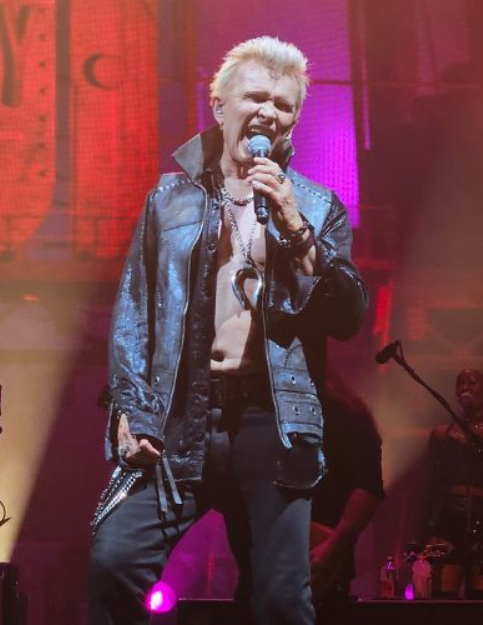
With Billy Idol set to be inducted into the Rock & Roll Hall of Fame this weekend, now (more
than ever) is the perfect time to look back on his remarkable career, and celebrate the music
that has made him such an enduring artist.
Idol first rose to prominence in the UK as the charismatic frontman of punk rock band
Generation X. During their time together, the band scored several UK chart hits and made
multiple appearances on the iconic television programme Top of the Pops, establishing
themselves as an important part of the British punk scene. From the outset, Idol demonstrated
that he intended to forge his own artistic identity and make the music that he truly wanted.
During his time with Generation X, the band recorded several songs that stood apart from their
punk contemporaries. Ballad-esque tracks such as “Kiss Me Deadly,” “English Dream,” and “The
Prime of Kenny Silvers, Pt. 1 & 2″ demonstrated a willingness to experiment with different
sounds, moods, and song structures that extended well beyond traditional punk.
Generation X played an important role in bringing punk rock to a wider audience. Thus, helping
define the sound and attitude of the British punk movement in the late 1970s. The band’s strong
melodies, infectious hooks, and a more accessible songwriting approach made punk accessible.
Alongside their peers helped establish punk as a significant force in British popular music while
demonstrating that the genre could embrace melody, experimentation, and a broader range of
musical influences. Generation X received an important early television showcase when they
appeared on ‘Marc,’ the television programme hosted by Marc Bolan in 1977. The appearance
introduced the band to a wider television audience, helping raise their profile and bring their
energetic punk sound to viewers across the UK. This was especially true as their episode aired
after Bolan’s tragic death.
Following the release of three studio albums and the band’s eventual dissolution, Idol relocated
to New York City to pursue a solo career. Once again, it was clear that Idol intended to follow his
own creative instincts and make the music he wanted. Blending elements of new wave, rock,
and dance with the spirit of punk, he began shaping a sound that was distinctly his.
It is little wonder, then, that Idol has gone on to earn the admiration of, and serve as an
inspiration to, countless artists across different genres. Among them are Miley Cyrus, Trent
Reznor, Rob Thomas (Matchbox Twenty), Billie Joe Armstrong (Green Day), Gwen Stefani, and
Duff McKagan (Guns N’ Roses). This diverse cross-section of musicians further demonstrates
the broad appeal of Idol’s distinctive sound and the lasting influence he has had across
generations of artists.
Between 1981 and 1990, Billy released a remarkable string of hits, including (but certainly not
limited to) “Hot in the City,” ‘’White Wedding’’ “Rebel Yell,” “Eyes Without a Face,” “To Be a
Lover,” “Sweet Sixteen,” and “Cradle of Love.” His distinctive image, rebel attitude, and
unmistakable unique sound made him a regular fixture in music magazines and on MTV. Thus,
cementing his status as one of the quintessential rock stars of the 1980s.
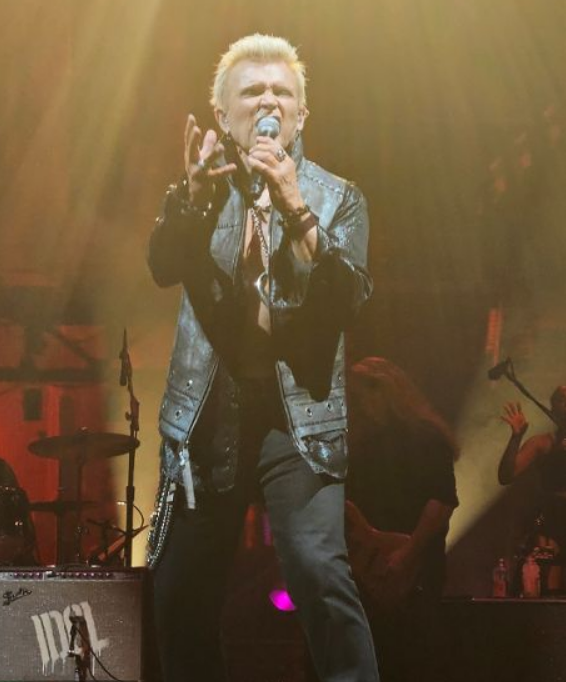
This status was further cemented by Billy’s stunning music videos. He clearly understood the
enormous potential of music videos as an artistic medium, embracing the visual possibilities of
MTV at a time when it was transforming the music industry. Rather than simply using videos as
promotional tools, he approached them as an extension of his music, creating memorable visual
scenes that complemented and enhanced his songs. His willingness to collaborate with
established filmmakers, including horror director Tobe Hooper, demonstrated his commitment to
this.
But there is so much more to Billy Idol than just his “MTV heyday.”
His later career spawned a myriad of great releases, showcasing his ability to produce top tier
material well beyond his most recognized works.
In 1993, he released the experimental Cyberpunk album, which fused elements of rave and
electronica with his signature rock sound. Although it didn’t achieve the commercial success of
its predecessors, the album still reached the Top 20 on both the UK and European album
charts. Its lead single, “Shock to the System,” also became a Top 10 hit on the US Billboard
Mainstream Rock Airplay chart. This success demonstrated that Idol had maintained a loyal and
solid fan base, one that was willing to follow him into new sonic territory and embrace his
continued musical evolution.
Following Cyberpunk, Idol released the single “Speed” in 1994, which became a moderate radio
hit in both the United States and Europe.
Billy also found a new generation of fans through his appearance in the 1998 romantic comedy
‘The Wedding Singer.’ The film starred Adam Sandler and Drew Barrymore, with Billy playing a
fictionalised version of himself. Idol became part of one of the film’s most memorable moments,
helping the protagonist win back the woman he loves. The film helped introduce Idol’s
personality and music to audiences who may have been less familiar, thus paving the wave for
an influx of new fans. In 2000, he contributed a new song ‘’Buried Alive’’ to the Heavy Metal
2000 Soundtrack.
Beginning around 2001, Idol returned to consistent touring for the first time since 1993.
Importantly, his setlists have never been limited to nostalgia or a collection of his greatest hits.
He has consistently incorporated newer material into his live performances, demonstrating that
he remains invested in his ongoing musical career rather than simply revisiting his past. In 2002,
he also appeared on VH1 Storytellers, delivering a well-received performance that offered
audiences a deeper look into his songwriting and musical history.
His cultural influence was also reflected in an amusing moment in Buffy the Vampire Slayer. In
Season 7, Episode 8, “Sleeper” (2002), Buffy describes a man (the vampire Spike) to a bouncer,
who dismissively responds, “Oh, the Billy Idol wannabe.” Buffy quickly corrects him with the
wonderfully self-aware retort, “Actually, Billy Idol stole his look from…never mind.” The
exchange plays on the similarities between the two characters while delivering a clever nod to
Idol’s instantly recognisable image. It is a small but telling example of just how deeply his visual
identity had permeated popular culture. Even finding its way into a television series with an
admittedly younger audience.
In 2005, his new album Devil’s Playground, reached the upper half of the album charts in
several countries, including the United States, Canada, Germany, and Switzerland. Its follow-up,
Kings & Queens of the Underground (2014), performed even better, achieving Idol’s
highest-ever debut position on the US Billboard 200. In between these albums, Idol released the
hits compilation The Very Best of Billy Idol: Idolize Yourself (2008).
Alongside his best-known hits, the collection featured three new tracks: “Fractured” (available as
a download-only bonus track), “New Future Weapon,” and “John Wayne,” which was also
released as a single.
What makes these additions particularly compelling is how naturally they sit alongside some of
Idol’s most beloved recordings. Maintaining that level of artistic quality so far into an established
career is no small achievement. All three tracks went on to become fan favourites.
A particularly strong example of Idol’s continued relevance came in 2020, when he collaborated
with Miley Cyrus on the song “Night Crawling,” featured on her “Plastic Hearts” album. The track
works as it seems to come across as a natural meeting of two generations of performers. It
combines Idol’s unmistakable vocals and rebel spirit with Cyrus’s contemporary rock
sensibilities. The collaboration was more than a nostalgic guest appearance as well, it
demonstrated that Idol could still contribute something fresh and exciting to a new musical
landscape. He also joined Cyrus for live performances of the song, further strengthening the
connection and once again introducing his music and persona to a younger audience.
These albums and releases were followed by two new EPs, The Roadside (2021) and The
Cage (2022). Both were met with generally favorable reviews. The track ‘’Bitter Taste’’ from the
Roadside EP has been continually hailed by fans online as one of Billy’s best tracks.
In 2025, he released the album Dream Into It. The album became a Top 10 chart success in
Austria, Germany, Switzerland, and on the US Billboard Top Current Album Sales chart.
He also launched his It’s a Nice Day To… Tour Again! tour, which continues through 2026.
I attended three shows on this tour and was particularly struck by the number of younger fans in
attendance. His music clearly continues to resonate with new generations of listeners,
something further reflected in the billions of streams his catalog has accumulated. That’s an
impressive achievement for an artist whose career began long before streaming platforms even
existed.
But chart positions and release dates are one thing. Witnessing his impact in person is quite
another. The atmosphere before his shows was intensely palpable. Young fans dressed in Idol
T-shirts, wedding dresses, and spiked bracelets were everywhere. They were peppered
alongside older fans who had been following him since the beginning. There was something
genuinely beautiful about witnessing these different generations come together. The loyalty of
longtime fans, coupled with the enthusiasm of newer ones, brought home to me the profound
impact music can have. This diverse gathering had all come together for one reason… Billy Idol.
When Idol finally walked onto the stage, I got goosebumps. That indescribable X factor, that
larger-than-life charisma, the energy that makes a mere man into a rock god, was present in
abundance. Around me, people screamed, danced, jumped, and sang along. I watched a man
in his forties enthusiastically scream for Billy and jump with excitement, right alongside much
younger fans. The ability to move an audience so completely was undeniable, and incredibly
moving to witness.
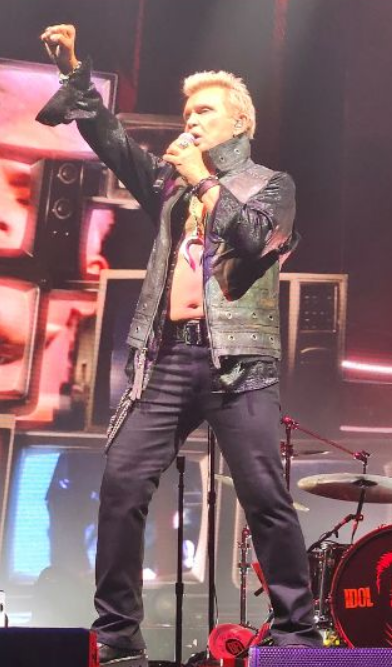
I found myself becoming emotional, too, particularly during the haunting “Eyes Without a Face”
(which I saw without embarrassment made me teary). Idol has an extraordinary ability to stir
something within people through his voice and songwriting. Looking around, it was clear that I
wasn’t alone in feeling that connection. After one of the shows, I encountered a young man in
his early twenties clutching a Billy Idol vinyl. He told me he had hoped to get close enough to
have it signed. I could see the emotion in his face and hear it in his voice. It was one final,
powerful reminder of Billy’s ability to genuinely move his fans, even those discovering him
decades into his career.
And it is precisely this impact, this emotional, beautiful, and profound connection he has forged
with audiences across generations, that makes his induction into the Rock and Roll Hall of
Fame so deserving. So warranted.
What makes it all the more remarkable is that Idol is still doing it.
Billy Idol has continued to tour, record, evolve, and introduce his music to new audiences
decades after his initial breakthrough. He isn’t simply surviving on the strength of his past hits
but actively contributing to his own legacy. Fans who are craving more, more, more owe it to
themselves to take a deep dive into Billy’s late-career catalogue. There’s a wealth of fantastic
tracks there and so much more to enjoy beyond just the classic hits.
*
Love what we do? Rock the Joint Magazine is completely free — no paywalls, no ads ruining the vibe — just passionate music journalism for 1,000+ readers a day. If you enjoy hanging out with us, please consider hitting the “Support Us” button and buying us a coffee on Ko-Fi. Even a small donation genuinely helps keep the magazine running, lets us publish more features, and reminds us that people value independent music writing.
Stream music from Billy Idol here
Artist Website here
By Matthew E.
Photo Credits: Matthew E.
JOIN ROCK THE JOINT MAGAZINE ON A JOURNEY FOR THE BEST IN INDEPENDENT MUSIC JOURNALISM – WE COVER ROCK, COUNTRY, JAZZ AND CHRISTIAN MUSIC. LEADING FEATURES, INTERVIEWS, REVIEWS AND EDITORIALS. SUPPORT US ON KO-FI.