Photo Credits Abraham Rowe
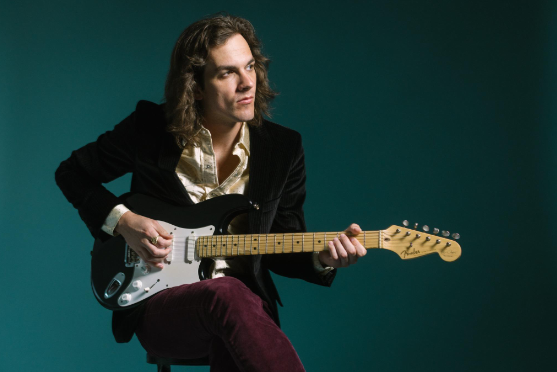
You can hear Muscle Shoals in Bay Simpson’s music, but you cannot pin it to one shelf in the record store. The Alabama singer-songwriter brings rock, blues, Southern soul and a little country into all four songs on his October 9, 2026, EP, “The New Normal.” That country feel is there even when the guitars turn up, and the rock influence is just as unmistakable when the pace comes down. Simpson isn’t trying on four different sounds. This is one recognizable voice finding several ways to use it.
During our conversation, Simpson made clear that the range is intentional. Growing upon Led Zeppelin, the Rolling Stones and artists who followed their instincts, he never felt particularly bound by genre. He knows the commercial side of music often wants an artist to repeat a successful formula, but he would rather follow the song. As he put it, ‘I’m not like this big believer in genre.’ What ties the material together, he believes, is the musician’s own voice and touch, whatever style the song happens to take.
The title track, “The New Normal” makes that point right away. Its opening guitar figure has the familiar stride of Tom Petty’s heartland rock, and Simpson has some of that same conversational way of delivering a line. He can tell a story clearly enough that you catch the words, then keep the rhythm moving so you are still tapping along. The chorus lands with a sly, lived-in shrug: ‘It is what it is and it’s alright.’ The humor is aimed at the everyday craziness people recognize without needing a lecture. There is Southern country in its phrasing, too, and a little of the sardonic sing-along spirit of the Refreshments’ Banditos.’
Simpson wrote ‘The New Normal’ in 2019 with Dylan LeBlanc, Keith Stegall and Vicki McGehee, initially while working on material for his band Outlaw Apostles. He told me itwas simply too edgy for that group, and they never managed to capture the sound heheard in his head. When he returned to the studio to record solo material, the song was still waiting. Its lyrics, he felt, had only become more relevant. This time, he finally got the recording he wanted.
The Petty connection goes deeper than a guitar sound. Simpson performed ‘The Waiting’ on The Voice and joined Adam Levine’s team. He describes Petty as one of his favorite songwriters, an artist whose unmistakable style matters more than technical vocal fireworks. ‘I want to make stuff that people will be listening to, like, 100 years from now,’ Simpson told me. For him, the songs must outlast the moment. He also spoke warmly of Levine, recalling off-camera conversations about Zeppelin and Petty, and said he was allowed to be himself throughout the television experience.
“Over Me Eyes” is the pop-rock standout and arguably the most immediately radio-ready song here. The opening has a guitar feel that calls to mind Tom Petty and the Heartbreakers’ ‘“Mary Jane’s Last Dance,” but the song quickly finds its own emotional center. Co-written with longtime collaborator Brian Maher, it captures that awful moment when somebody’s face tells you a relationship is finished before a word is spoken. A sliding, blues-colored guitar line works through the verses without interrupting the melody. The hook is easy to remember, and there is genuine feeling beneath all that polish.
When I asked whether the scene came from a particular breakup, Simpson explained that he and Maher often begin with a title and melody rather than a specific autobiographical event. The phrase gave them an image they could immediately understand: one look tells the whole story. Although he can connect it to past relationships, this song came together organically through the writing process. Its musical callbacks, he said, were part of the fun of painting that picture.
“Different Animal,” written with Logan Platt, takes a slower, easier-going approach. Itopens on a storytelling vocal that lets the listener settle in, then builds into a sturdy chorus. There is a slight Chris Daughtry quality to Simpson’s tone when he leans intothe melody, but the production stays smoother and more restrained than a big arena-rock arrangement. The song sounds more like melodic pop-rock with a modest blues influence than straight blues, and the vocal is given room to carry its message.
The story behind it was more personal than I expected. Simpson recalled texting with awoman who questioned how a relationship could work around his travel anddemanding schedule. His half-joking response was, ‘Maybe I’m just a different animal.’ The story behind it was more personal than I expected. Simpson recalled texting with awoman who questioned how a relationship could work around his travel and demanding schedule. His half-joking response was, ‘Maybe I’m just a different animal.’
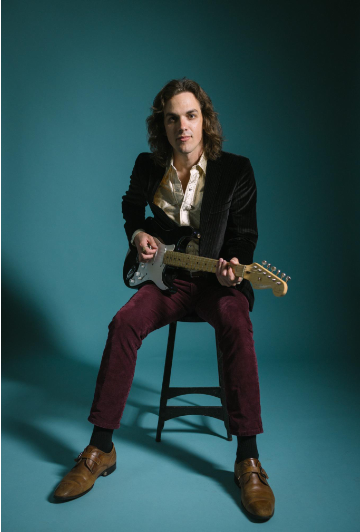
Then “Livin’ the Blues” puts its foot down. From the driving drumbeat to the fast, bluesy guitar, this is the toe-tapper of the set and my favorite. The repeated ‘runnin” and ‘gunnin” phrases lock into the pace instead of getting in its way. For a moment Simpson’s voice carries a hint of Glenn Frey and the Eagles, though the guitar is rougher around the edges and considerably more blues-rock. There is a Southern-rockcharge to it, with hard, twangy, almost slide-like runs and solos that really kick.
Some of the lyrics are edgy enough that a radio edit might be needed for certain stations. Still, I could happily turn this one up in the car. Simpson told me he and his stepfather, James LeBlanc, share the guitar work on the track. Simpson handles most of the playing, including the principal riffs and solos, while LeBlanc adds the harmony line on the main riff in the turns after the choruses. They wrote the song with Heath Owen, son of Alabama singer Randy Owen. It was written around the same period as “The New Normal,” and Simpson has been closing his live shows with it for some time. That is why he placed it last on the EP: he wanted the record to finish with the feeling of a live set.
The EP was recorded at The Nutt House Recording Studio in Sheffield, Alabama, with Jimmy Nutt. The detail in the mixes deserves notice, particularly the separation between vocal lines, guitar fills and the rhythm section. Simpson confirmed that he and LeBlanc played guitars across the EP, with Simpson handling the acoustic parts and most of the foundational guitar work. Le Blanc played bass on all four tracks, while longtime bandmate Evan Sandy played drums.
On “Different Animal,” Simpson had already built the rhythm, acoustic and solo parts before inviting LeBlanc to playthrough the song and add whatever he heard.Nutt, a longtime family friend, invited Simpson into the studio after his appearance on The Voice. They shared an interest in making a rock record with breathing room.
Simpson says he leans toward minimalism in the studio, preferring each part to live on its own instead of filling every opening. That approach is audible throughout the EP: the guitar and vocal trade the spotlight, and the drums drive the songs without crowding them.His musical upbringing helps explain that instinct. Simpson grew up around theperformances and studio sessions of his mother, Angela Hacker, stepfather James LeBlanc and stepbrother Dylan LeBlanc. He hears pieces of their voices in his own, and credits LeBlanc in particular as his most important songwriting influence.
Playing alongside family, he says, remains one of the best parts of making music. The family connection also led to an unlikely early songwriting break. Simpson, LeBlancand Heath Owen wrote “Never Enough,” and only days later Owen happened to meet Kid Rock at a Nashville party. Rock heard the song, liked it and recorded it almost immediately. Simpson was around 20. For a young songwriter, seeing a song travel that quickly from a writing room to a major artist was proof of what the work could lead to.
There is more music on the way.
Simpson explained that the planned fifth EP track, “I’ll Take It,” was left off partly because it did not fit the rock-oriented four-song sequence. His family band, The Family, had also released its own version on an album this year. He still has a solo recording of the song and may release it later. Meanwhile, he is working on a full-length album at FAME with Spencer Coates, with most of that materialexpected to be new bring that creative energy forward and give the next generation something of its own to show for it.
EP Summary
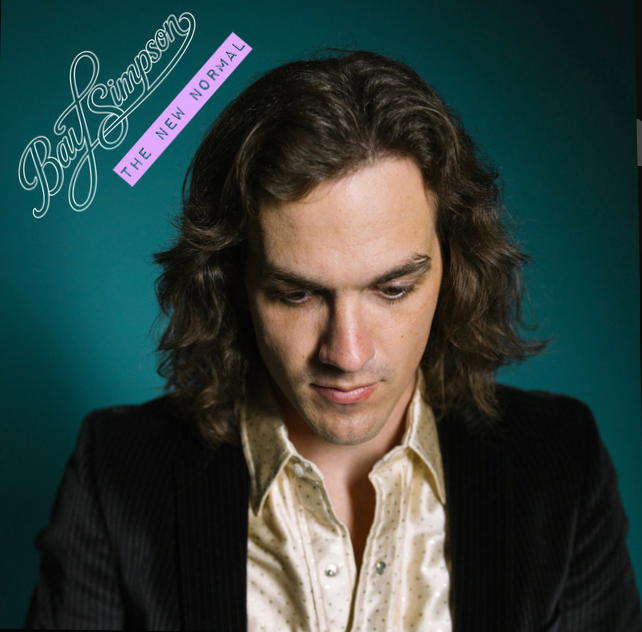
Four tracks, four different shades of the same musician: “The New Normal” is witty, guitar-led heartland rock; “Over Me Eyes” is the potential pop-rock hit; “Different Animal” reveals the determination behind the hook; and “Livin’ the Blues” is the lively blues-rock number I would put on again first. None of them drops that touch of country completely. “The New Normal” is a strong, well-produced EP from an artist who cares about the song, knows how to tell a story and understands when to let the instrumentsbreathe. After speaking with Simpson, one thing is clear: he is not treating Muscle Shoals as a monument to the past. He wants to be part of what comes next.
*
If this feature struck a chord, why not explore more of what we do? From exclusive interviews to reviews, editorials, poetry, and our own merch—there’s plenty to discover. We put a lot of heart into every piece, and if you’d like to show a little love in return, you can support us with a small donation via the Ko-Fi link below. Every coffee keeps us going—and helps keep the magazine free for all. Thank you!
Stream Music from Bay Simpson here
By Chad Cubberly

JOIN ROCK THE JOINT MAGAZINE ON A JOURNEY FOR THE BEST IN INDEPENDENT MUSIC JOURNALISM – WE COVER ROCK, COUNTRY, JAZZ AND CHRISTIAN MUSIC. LEADING FEATURES, INTERVIEWS, REVIEWS AND EDITORIALS. SUPPORT US ON KO-FI.