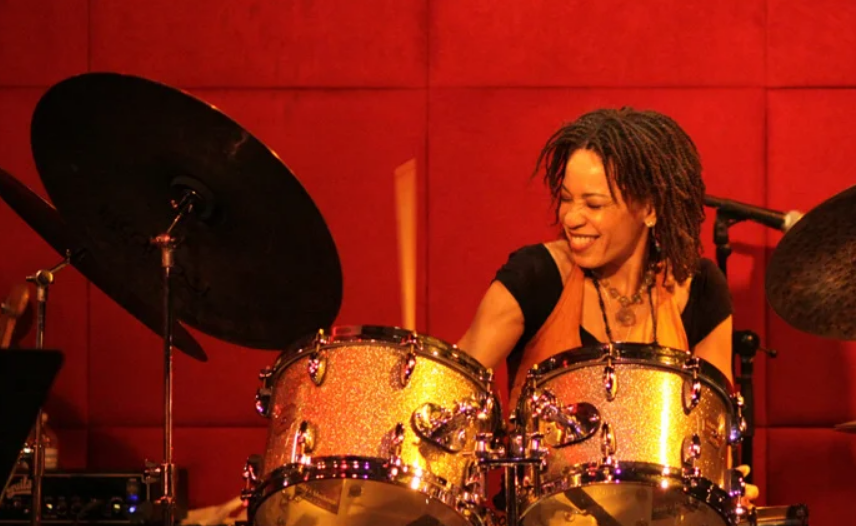
From Max Roach and Lenny Kravitz to Jimi Hendrix and Carlos Santana, Cindy Blackman Santana has travelled a remarkable musical journey. In this fascinating conversation, we explore the creative force behind The Power of 3, the magic of “Taxi”, the influence of jazz and the extraordinary ability of music to express what words cannot.
Ohoto Credit for feature photo: Larry Hilton
There are certain musicians you could sit down with for hours and never run out of things to talk about. Cindy Blackman Santana is undoubtedly one of them.
Having recently reviewed “Taxi,” the latest single from The Power of 3, I was particularly excited to sit down with the drummer whose career has taken her through the worlds of jazz, rock, funk and blues. As it happened, our conversation took place on her birthday, making her generosity with her time all the more appreciated.
Alongside guitarist and vocalist Orianthi and bassist Rhonda Smith, Cindy is part of a formidable trio. With Eddie Kramer producing, a previously unheard Jimi Hendrix riff finding new life on “Taxi,” and Carlos Santana appearing on their forthcoming debut album, there was certainly no shortage of things to discuss.
But what fascinated me most was discovering how Cindy thinks about music, what she hears when she plays, and what she hopes the rest of us feel when we listen.
Where the Rhythm Began
Music was a natural part of Cindy’s childhood. Surrounded by relatives who played instruments, she found herself gravitating towards one particular sound.
“When I would listen to music, I always singled out the drums,” she recalled. “So once, as a small child, once I really realized what that was, then I just went after it.”
I shared a story about my own grandson, who is still in diapers but has already decided that his children’s drum set isn’t quite good enough. He wants to play his father’s drums, even if it means standing up to reach everything.
As a guitar player, I have always admired the coordination that drummers possess. Cindy explained that her introduction to organised musical performance came from somewhere rather different than one might expect.
“My first band, actually, was a fife and drum corps. So that’s where I learned rudiments, and I got my hands together.”
It was there that she developed her preference for the traditional grip, something that remains natural to her today. Initially drawn towards funk and rock, she found herself taking a different musical direction when a family friend who was playing with jazz saxophonist Jackie McLean introduced her to the work of legendary drummer Max Roach.
He wrote out a pattern involving the ride cymbal, hi-hat, bass drum and left-hand triplets. For Cindy, it opened an entirely new world.
“I was really so excited about something that would require all of my limbs, you know, my whole body to do, and something that was more intricate than what I had been doing.”
Jazz: A Music Without Boundaries
Although millions of listeners know Cindy through her work with Lenny Kravitz and Santana, jazz remains at the heart of her musical passion. Our conversation turned towards her appreciation for jazz and its connection to artists such as the late Jack Bruce of Cream.
“I fell in love with jazz because it’s creative,” she explained. “It’s not a prejudicial music.”
The freedom to bring different influences together is something she clearly treasures. “There’s a lot of music that I love, and I want to amalgamate all of that into a sound.”
She also challenged the misconception that jazz musicians simply get onstage and play whatever comes into their heads. “It’s a very intelligent music,” she said.
As someone who spends considerable time listening to blues and exploring its historical roots, I mentioned that I hear elements of blues and jazz in nearly everything, from funk and rock to contemporary rap. Cindy agreed, describing those genres as branches extending from earlier musical traditions.
She spoke about African rhythmic traditions and European classical harmony, and how musicians transformed those influences into new approaches to rhythm, sound and time. Her understanding of music reaches well beyond the drum kit.
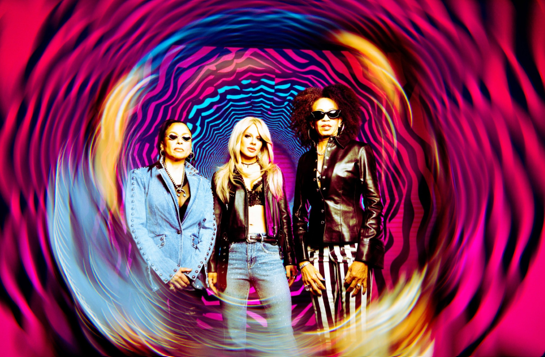
The Power of 3: Rhonda Smith, Orianthi and Cindy Blackman Santana. Photo: Jim Louvau.
Seventeen Years with Lenny Kravitz
Having seen Cindy perform with Lenny Kravitz over the years, I was interested in hearing about the relationship behind their unmistakable musical chemistry. I mentioned a longtime Detroit-area fan of Kravitz and the kindness he has shown her over the years.
“The chemistry was there,” Cindy said. “And he is. He’s a gracious person.”
She attributed much of that graciousness to his upbringing, recalling her experiences meeting his parents and grandfather. She described his mother as humble and possessing a beautiful spirit, while his father was honest, outspoken and a genuine music lover.
The conversation naturally turned towards family and the values we carry throughout our lives. Coming from a small Ohio community of approximately 3,000 people, Cindy remembered an environment where everyone knew one another and people were accountable for their actions.
“Everybody had to own up to whatever they said or did, which was great, because it taught you virtue.”
As a social worker and therapist, I could certainly relate. Much of what I have become professionally can be traced back to the values instilled in me by my own grandparents.
Reflecting on her seventeen years working with Kravitz, she described the experience warmly. “It was an amazing run. We did incredible tours and made some great music together.”
The Power of 3: Three Musicians, Three Personalities
Orianthi, Rhonda Smith and Cindy Blackman Santana each possess distinctive musical identities. What immediately struck me when listening to their first three singles was how different the songs sounded. “War In The Streets,” “Treat Me Like A Lady” and “Taxi” showcase a band comfortable moving between musical territories.
I wondered whether that diversity had been deliberately planned. Cindy explained that although they didn’t want every track to sound the same, the writing process itself was organic.
“As we were writing the songs, we just wrote what came.”
Each song developed from its own starting point, whether a guitar riff, a drum groove, a lyrical idea or a melody. “They all came in in their own way, and then we all just added our spice to it.”
Working with Eddie Kramer, the band approached mixing with that same individuality, allowing each composition to establish its own identity. None of these musicians needs to prove anything individually, and that experience appears to have given them the confidence to create collectively without imposing unnecessary limitations on the music.
Giving Jimi Hendrix a New Ride with “Taxi”
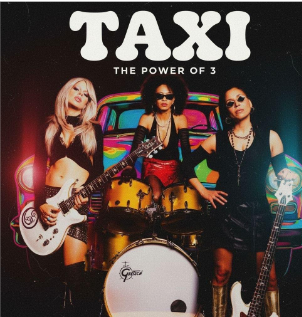
Of course, I couldn’t speak with Cindy without discussing the story behind “Taxi.” Orianthi recreated a previously unreleased Hendrix guitar riff discovered in the archives, and the trio built a new song around it. As I noted in my review, it is Hendrix’s musical idea reimagined, not a Hendrix performance dropped into a modern recording.
I asked Cindy what went through her mind when she first heard the riff.
“I was thinking, oh, this is really cool. That’d be cool if we can use that and make a song out of it.”
The enthusiasm was shared by all three musicians, but what interested me most was her description of its feel.
“It had a very New York energy to it. It had a very urgent kind of feel.”
Having spent more years living in New York than in her original hometown, Cindy understands that energy intimately.
“When that gets into your bones and into your body, you don’t forget that.”
She painted a wonderfully familiar picture of the city: people rushing past, cars moving in every direction, someone stepping in front of you to steal the taxi you were attempting to hail, and the desire to escape the madness for just a little while. Sometimes you simply want to get into a taxi and tell the driver to take you somewhere for twenty minutes.
Having already reviewed “Taxi,” I particularly enjoyed hearing that explanation. The energy that initially drew me into the track suddenly had a much clearer geographical and emotional identity. Hendrix provided the musical spark, but The Power of 3 gave it somewhere new to go.
Eddie Kramer and the Breath of an Instrument
One of the most fascinating portions of our conversation concerned the band’s decision to record in analogue with Eddie Kramer. I asked whether that changed the way Cindy approached her playing.
“Recording in analog does not change the way I play,” she explained. “It just changes the quality of sound, and it changes the feel of what you hear.”
For Cindy, the appeal is the ability to hear the instruments more naturally. She wants to hear the sound of the drums as she tuned them and the atmosphere of the room in which the performance occurred.
And then she offered a description that has stayed with me since our conversation: “You get the breath of an instrument.”
Drums, she explained, physically move air. Capturing that movement and the natural acoustics surrounding the instrument helps preserve something of the original performance.
“You’re just getting more of the beauty, you know, of that moment that happened in that music.”
Kramer’s ability to recognise and preserve those qualities made him a particularly valuable collaborator. Cindy emphasised that Eddie is himself a musician who plays piano. He listens to the music, understands its nuances and engages with the individual character of each composition.
“It’s not music that comes off of a conveyor belt,” she said. “It’s all very individual, and it all has its own uniqueness.”
In an age when technology offers seemingly endless opportunities to manipulate recordings, there is something refreshing about musicians who place such importance on preserving the original moment of creation.
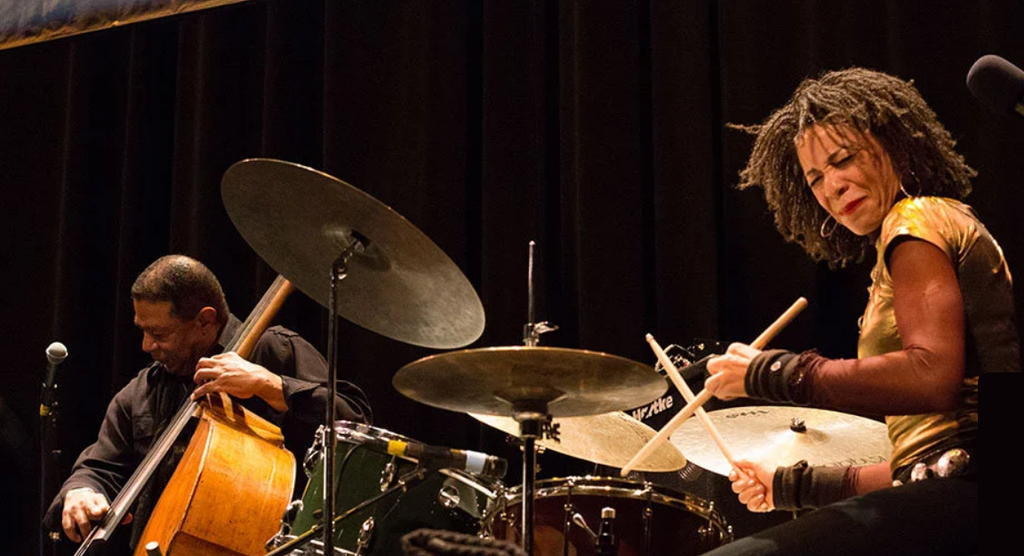
Photo Credit Michael Verity
Carlos Santana and “The Power of Love”
Another exciting element of the forthcoming album is an appearance by Carlos Santana on a ballad entitled “The Power of Love.” Carlos had been listening to tracks as the band completed them and expressed a genuine interest in becoming involved.
“He told me that he wanted to be involved.”
The opportunity came together in Los Angeles, where Carlos flew himself and his team to participate in the recording.
“As we were playing, I was smiling. Everybody was just smiling because it was so amazing.”
Interestingly, the guitar solo listeners will hear on the album is not the entirety of what Carlos originally played.
“He actually played longer than what you hear on the record. We had to edit it, but I wish the full track was on there, the full solo that he took, because it was really, it was so much fun to play it.”
Cindy spoke about Carlos’s sensitivity as a musician, particularly his instinct for knowing when to play and where to place a note. I shared my own memory of seeing Santana for the first time in 1988 at the Meadow Brook Music Festival in Michigan, a concert my father took me to.
There are guitarists who impress you with what they can play, and then there are guitarists who make you feel something with a single note. Carlos Santana has always belonged to the latter category. And if anyone happens to be listening, I certainly wouldn’t object to hearing that unedited solo someday.
Bringing The Power of 3 to the Stage
On December 15, The Power of 3 will appear at the GRAMMY Museum in Los Angeles, celebrating their forthcoming self-titled debut album, due January 29, 2027, through She2Music.
When I asked Cindy what audiences could expect, her enthusiasm was immediate.
“It’s gonna be packed full of energy.”
She described Orianthi and Rhonda as musicians who genuinely enjoy playing together and remain fully engaged in the performance.
“Everybody’s there and present, you know, which is very cool.”
Naturally, being based in Michigan, I had to ask about the possibility of the trio coming to Detroit. Although nothing is currently scheduled for The Power of 3 in Detroit, Cindy expressed enthusiasm about returning.
She recalled performing with her own band at the Detroit Jazz Festival, where she particularly enjoyed the camaraderie among musicians and the opportunity to catch part of legendary bassist Ron Carter’s performance following her own set.
“It was an amazing festival.”
She hopes to return with The Power of 3, her own band and Santana. Rest assured, I’ll be keeping an eye on those tour announcements.
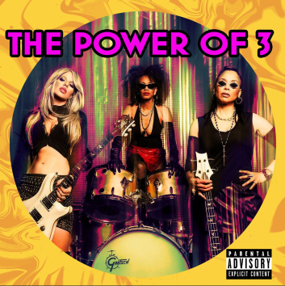
The Power of 3 • Self-titled debut album • January 29, 2027. Promotional album artwork.
Coherence: Another Side of Cindy Blackman Santana
As our conversation began winding down, Cindy encouraged me to explore her latest solo album, Coherence, released July 31, 2026, through Mack Avenue Records. The album features her touring band alongside special guests including Carlos Santana, John McLaughlin, Matt Garrison, Ray Angry and string musician Dave Eggar.
“I’m so proud of that record,” she told me. The opportunity to document the musical relationship she had developed with her touring band, while introducing additional textures through strings, was particularly meaningful.
“I was really happy making that and adding the strings to it, getting a chance to record my touring band.”
Given everything we had discussed about jazz, creative freedom and the emotional possibilities of music, Coherence is certainly going on my listening list.
What Music Can Say When Words Cannot
Before concluding our conversation, I wanted to ask Cindy a question that connected my two professional worlds.
As a therapist, I am fascinated by the ability of music to reach people in places that ordinary conversation sometimes cannot. Music can awaken memories, help us access emotions and give expression to experiences that are difficult to articulate.
What do you communicate through drums that words can’t express?
“I love this mode of thinking, and I love the question,” she responded.
She spoke about music’s transformative potential and its ability to transcend cultural differences, religion, political views and prejudice.
“Drums are earthy, they’re powerful.”
Yet that power represents only part of what she hopes to communicate. Drums can inspire movement and joy, establish the emotional atmosphere of a performance and express qualities that people might not immediately associate with percussion.
“At the same time, they’re also romantic and beautiful.”
For Cindy, the drums are capable of expressing a remarkably broad range of human emotions.
“I want people to feel that. I want them to feel the guttural, earthy power that they possess.”
She also wants listeners to experience the joy, the rhythmic movement and the beauty that drums bring to music. As a therapist, I have witnessed people struggle to identify or articulate emotions. As a music lover, I have experienced moments when an instrumental passage communicated more to me than an entire conversation could. Cindy’s answer brought those two worlds together beautifully.
Final Thoughts
What began as a conversation about “Taxi” and The Power of 3 became something considerably broader. We discussed musical history, family, the creative freedom of jazz, the integrity of analogue recordings and the remarkable emotional possibilities contained within a drum kit.
And somewhere along the way, I was reminded that the musicians who continue to fascinate us are often those who remain fascinated by music themselves. Cindy Blackman Santana clearly hasn’t lost that curiosity.
We concluded our conversation by exchanging Thanksgiving wishes, and Cindy even sent birthday greetings to my granddaughter, who shares her birthday. It was a wonderfully human ending to a conversation with someone whose musical accomplishments could easily have dominated our entire discussion.
Instead, we talked as two people who love music.
And perhaps that is precisely what music does best.
*
If this feature struck a chord, why not explore more of what we do? From exclusive interviews to reviews, editorials, poetry, and our own merch—there’s plenty to discover. We put a lot of heart into every piece, and if you’d like to show a little love in return, you can support us with a small donation via the Ko-Fi link below. Every coffee keeps us going—and helps keep the magazine free for all. Thank you!
The Power of 3’s self-titled debut album arrives January 29, 2027, through She2Music. “Taxi,” “War In The Streets” and “Treat Me Like A Lady” are available now. Cindy Blackman Santana’s Coherence is also available now.
Stream Music from The Power of 3 here
Cindy Blackman Santana website here
By Chad B. Cubberly
Join Rock the Joint Magazine on the road to the best independent music journalism, interviews, and reviews. We cover Rock, Country, Jazz, Blues and Christian music. Support us on Ko-Fi (link on each page) to help the magazine grow and value independent journalism.