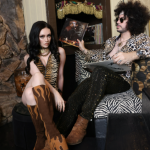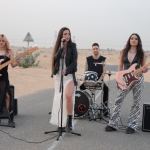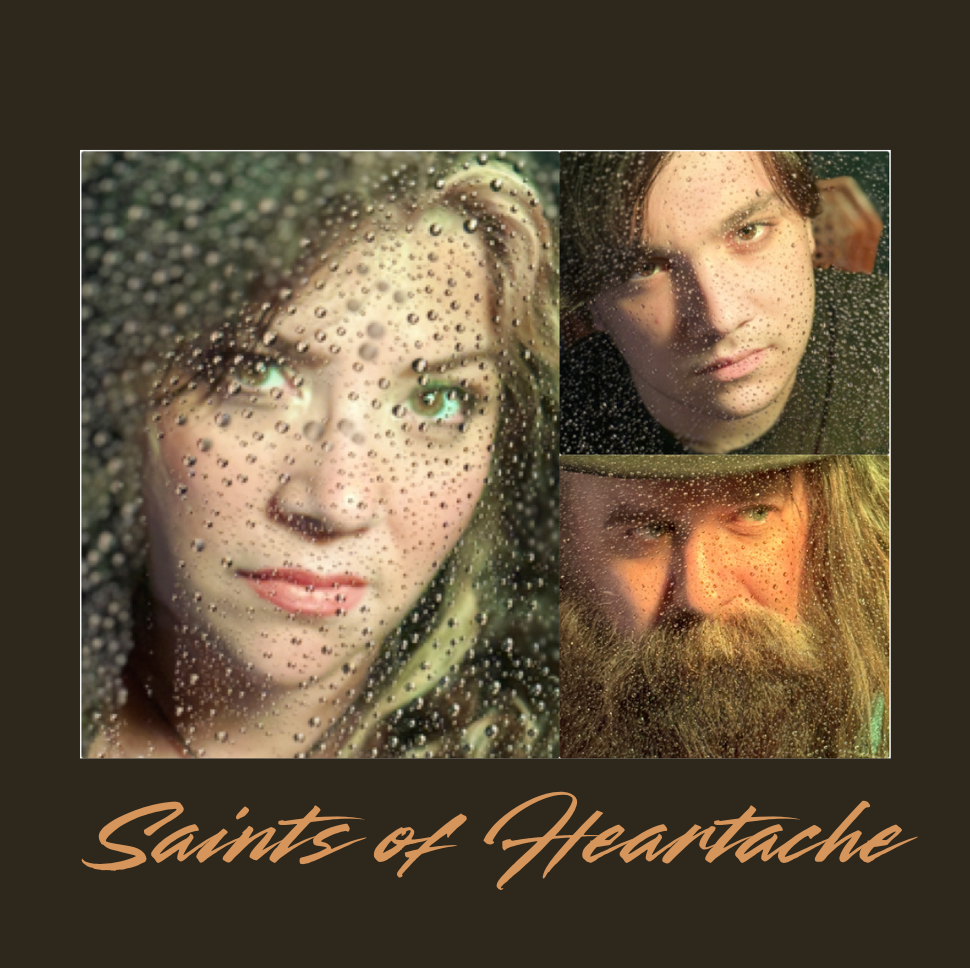
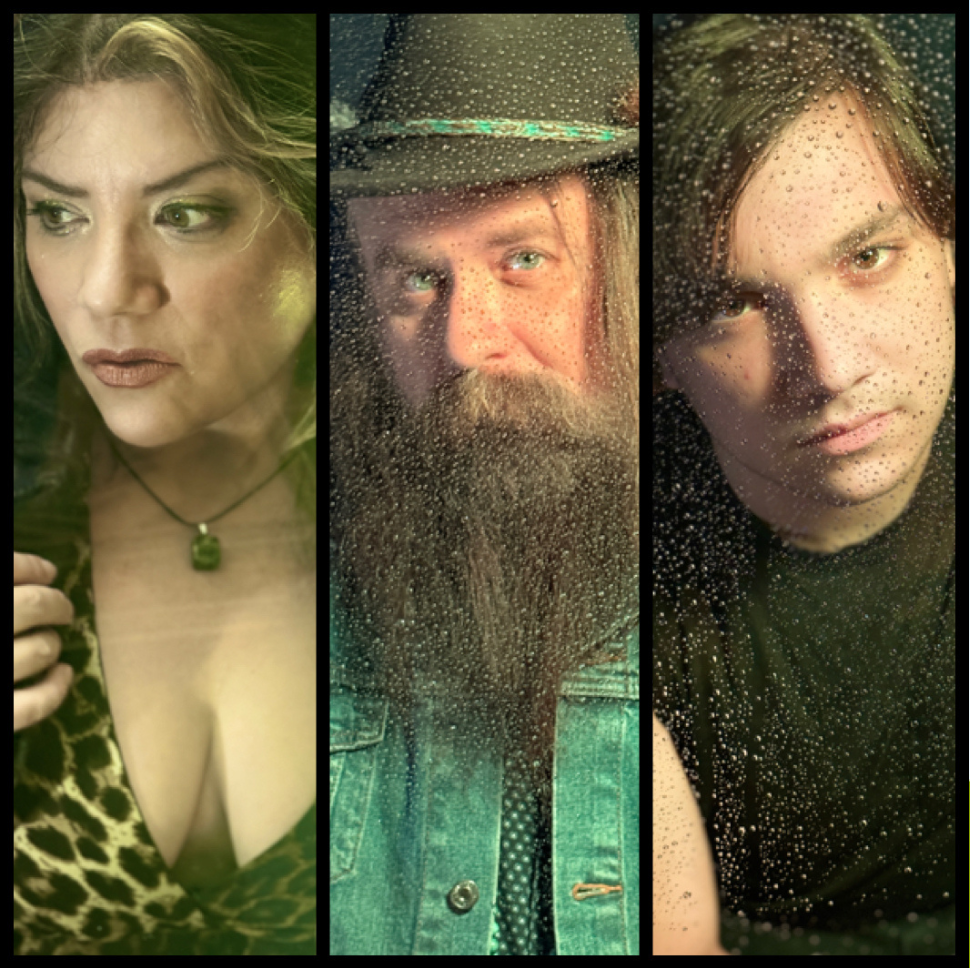
Saints of Heartache, formerly known as Female President, are a three-piece alt-rock/indie pop band from North Carolina, blending driving riffs with powerful vocals.
One of the great pleasures of running Rock The Joint Magazine is the friendships we’ve made with artists across the world. These guys definitely fall into that category. We last caught up properly in 2022 and have regularly kept in touch through Instagram, so we were delighted to hear their new album and combine this review with a few questions about the record.
Our Interview with Dréa Atkins
You describe this album as a love letter to Generation X—my generation. We grew up with vinyl records, cassette tapes, riding bikes until dark, and friendships that existed without social media. Today people are confiding in AI and living increasingly online. Is nostalgia simply part of getting older, or do you genuinely think we lost something important as society became more digital?
Dréa: Unequivocally, humanity has lost something since the rise of social media and digital life. I miss the “not knowing-ness” of the 90s. It forced us to see boredom as opportunities for imaginative journeys. While it’s been wonderful to connect with new friends all over the world, we’ve collectively seen the disappearance of a physical “third place”, the rise of a new form of addiction, homogenization of a younger generation led by influencers, and divisive, violent political rhetoric. AI simply encourages people to stop thinking for themselves, to avoid sitting with discomfort while you work through issues of personal insecurities or doubt. It literally steals people’s voices and unique identities. It discourages the pain of creativity, which robs the creator of the satisfaction of giving birth to a new creation. In the past, we’ve addressed all of these sentiments through a more cynical lyrical lens but in this album we’ve concluded that “everything is beautiful, and we’re still alive.” We survived so much and we have to instill that grit in the younger generation. We have to hold onto this moment and recognize that humans are still capable of miraculous beauty and being bound to one another is a gift.
When we spoke in 2022 you were Female President, now Saints of Heartache, I am sure this is such a predictable question but I am asking it anyway – why the name change?
Dréa: Female President was conceived in 2020 as a punk rock war cry, “why not a woman?” As our music and message evolved quickly into a more emotional, raw sound, the name felt less authentic. Then, with the approach of the 2024 election, we wanted to distance ourselves from all the nasty political rhetoric online. We noticed that during that cycle we had music taken down, posts blocked, just odd occurrences that made making music unnecessarily difficult. Johnny created the title of our song, “Saints of Heartache,” and we felt that song captured the most authentic qualities of the message of our band.
In our review, we wrote of “Blazed in Church” (review below) that ‘to quote Albus Dumbledore: “Happiness can be found, even in the darkest of times, if one only remembers to turn on the light.” She also wrote that it is a song for the lonely – as songwriters you may have an altogether different take on it, what is this song to you and what are your perspectives on it?
Dréa: That’s such a beautiful interpretation that I prefer to say that’s right on the money! Sincerely, when planning the songs and stories of this album, we wanted to start from childhood. Johnny and I grew up in two very different societies of America. I was an upper-middle-class suburban small-town kid, and he was raised by loggers in the Appalachian Mountains. Our only common themes were being free to roam outside until dark, our parents’ wild parties, and church. We’d both be sent outside to play until dark, just look for the porch light to know it’s time to come home. Remember how scary and lonely it could be in the dark, whether in your room at night or in the forest, no Ring cameras to watch you or GPS to know your location? At times, Gen X was truly alone in this world. Then imagine a squirmy kid staring through some intense visages of stained-glass windows, hearing fire and brimstone from the pulpit, but the night before you heard a group of raucous adults sauced and singing loudly around the piano. As musicians, we had to follow the path less traveled, and sometimes it’s still lonely.
Dream pop often creates a feeling rather than telling a straightforward story. When you’re writing, do you begin with the emotion you want listeners to experience, or does the music lead you there naturally?
Dréa: One truly influences the other. We come to the table with an overall theme to capture the emotions and stories, and then someone will throw out a bass riff or guitar chords. If that riff inspires a feeling, we follow the feeling.
A favourite track of ours was “16” – it reminded us a bit of the music of The Bombpops and it has all of this bottled fizz! Was it always the natural album opener?
Dréa: We thought so too! We wanted to immediately grab the naive energy of a Gen X teenager and just have fun. When we sent the album to be mixed and mastered by Jamie King Audio, we intentionally sent them in a random order and asked him to choose. He agreed and we’re thrilled with his contributions!
The album title, Everything is Beautiful, and I am Still Alive, manages to feel both hopeful and hard-earned. Was there a particular moment when those words became the obvious title, or did the meaning reveal itself gradually as the songs came together?
Dréa: It was a slow reveal. The working album title was “Recollections of Misspent Youth” but it was too jaded and confusing for the vibe of the entire album. By the time we finished recording AAA, we wanted to reflect that we collectively survived shared trauma and that we’re still here. Once again, Johnny proposed the title, and it stuck. We always follow the feeling.
I think I am not alone in saying I can’t watch the news anymore; it is so relentlessly depressing and I have never known society to be so intolerant of the views of others and so lacking in the ability to just discuss things (possibly social media algorithms that constantly validate your existing views don’t help). Do you feel music is even more essential to heal wounds and hold people together?
Dréa: Music, created by humans, is the glue for us. It holds our family together. We are grateful to spend each day in service of it. We want to create something that is a bright spot for someone. If it makes me shake my booty, we keep it. If it makes us feel powerful, we play it louder. It drowns out the insufferable noise for a while.
If someone had never heard Saints of Heartache before and only had time to hear one song from the album, which track would you choose to introduce them—and why?
Dréa: This may be the hardest question ever asked. I know it’s important, but we love all of these songs equally. If a festival organizer said, “ya got one shot kid, one song from this album,” I’d ask if they wanted to drink and play them “Saturday Night.” I’d ask them what mood they were in and point them to their medicine.” We love all of these songs equally; we even cut a couple from this album you may hear on a subsequent album. the lyrics “This life’s worth living”. Every day we stoke the fire. Don’t let go til we catch the sunlight.”
Fun Question -It is a hard winter’s night. The tour van/bus has broken down and a harsh wind blows through the night. Nearby you see a small house, it seems abandoned, yet there is a fire burning, food on the table, and working electricity. While you wait for morning – what book and what film will get you through the night?
Dréa: Funny enough, Johnny was driving us back across the country in a Bandwagon and broke down in the middle of nowhere Utah, high in the mountains. All the kids were with us, and we had to wait on the side of the road for hours. If we broke down again, Johnny would be tasked with fixing the bus and getting us back on the road pronto. Jasper would be watching Soprano’s or playing video games, and I’d be binging Hacks with a well-earned cocktail.
Press Release
Our first LP as Saints of Heartache will be released in the summer of 2026.
After a challenging year filled with highs and lows, we realised that, no matter what, everything is beautiful and we’re still alive. This album takes listeners on a nostalgic sonic road trip through the 1980s and 1990s, before pointing towards a future imagined through an untainted soul.
It feels both familiar and fresh, blending moody, seductive atmospheres with groovy, psychedelic sounds. So roll down the windows, turn up the volume and lose yourself in the journey.
The album is described as “a love letter to Generation X.”
It is released July 29, 2026.
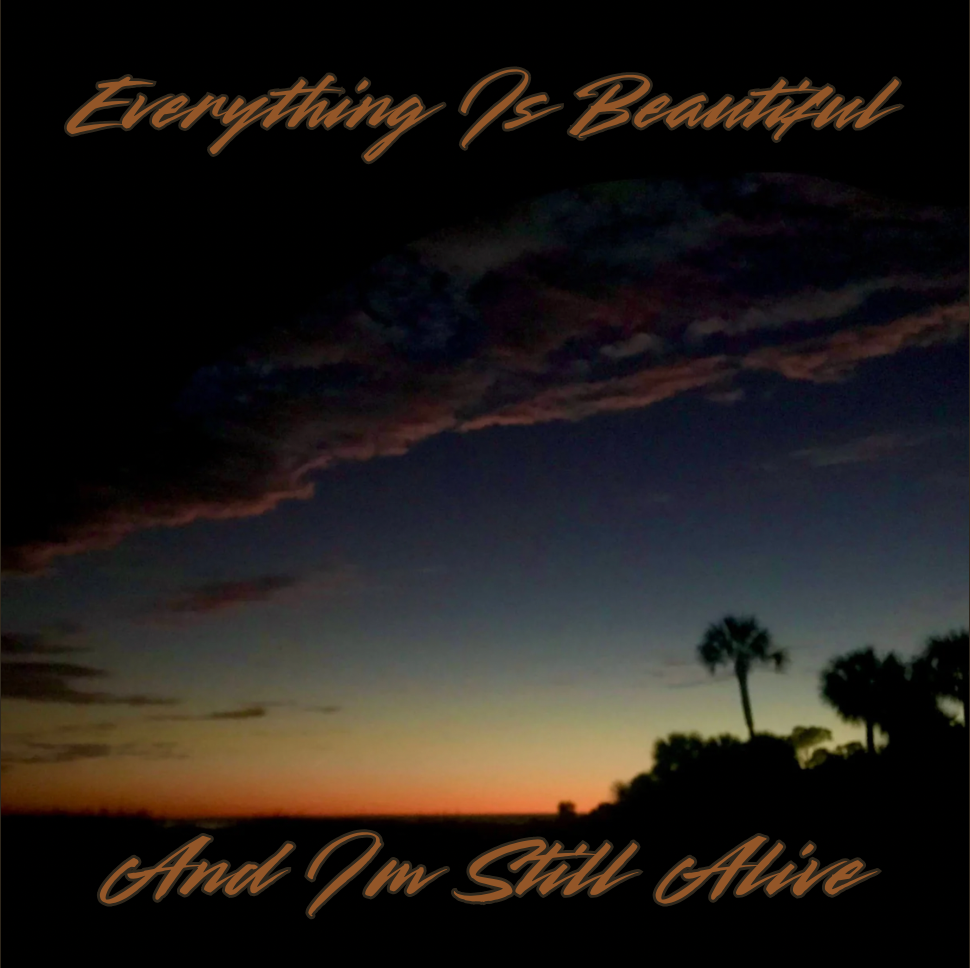
Our Review
“16” bursts out of the speakers with infectious LA-style melodic punk energy. It took me back to the coming-of-age television dramas my son used to watch—full of optimism, teenagers convinced the world was waiting for them, and the belief that tomorrow could only be better. There is something undeniably special about being sixteen.
I also loved the drum sound on this track. It drives everything forward with confidence and enthusiasm. Perhaps that’s ultimately what this album is saying. We can’t return to 1989 or 1996, but we can hold onto the parts of ourselves that made those years special. The world may be noisier, faster and more divided than it once seemed, but there is still beauty to be found if we pause long enough to listen.
“AAA” shifts the mood completely. Darker, more psychedelic and carrying echoes of Siouxsie and the Banshees, it has a late-night Windmills of Your Mind quality that slowly pulls you into its spell. Musically it reflects on identity, asking where the person in the mirror has disappeared to. It made me think about those moments when you catch your own reflection and wonder where life is taking you. “Make it stop…” becomes less a lyric than an inner thought.
Elizabeth I is said to have banned mirrors during her later years. I’m not quite at that stage yet!
“Blazed in Church” is lighter and dreamier than its predecessor, with Dréa Atkins’ vocals as clear as a bell. Musically it feels made for warm summer evenings, but emotionally I found it to be a song for lonely people.
Sometimes the wind may howl, the trees may sway and the skies may turn grey, yet music always has the remarkable ability to carry us somewhere better. To quote Albus Dumbledore, “Happiness can be found, even in the darkest of times, if one only remembers to turn on the light.” Having now read Dréa’s explanation of the song, it is pleasing to know that our interpretation wasn’t too far away from the band’s own intentions.
At just over two minutes, “Human Waste” doesn’t waste a second. It mixes hillbilly country with rock ‘n’ roll and a healthy sense of humour while lamenting the apparent shortage of decent leaders and wondering where they’ve all disappeared to. Given that Count Binface—a wonderfully ridiculous British satirical election candidate who campaigns wearing a bin on his head—continues to attract genuine support, the song’s observations feel strangely relevant.
“Lakewood Drive” is a guitar-driven rocker powered by a relentless drum beat that gives the whole song a real sense of forward motion. It isn’t the album’s most immediately accessible track, but I suspect it’s one that grows on you with every listen. It’s easy to imagine it accompanying a late-night drive with empty roads stretching into the distance.
Around the three-and-a-half-minute mark, a spoken passage about driving through the night and embracing the sunrise perfectly captures the song’s spirit, while the dissonant guitar ending provides a satisfying and unexpected conclusion.
“Misspent Youth” is built around another terrific drum performance and instantly transported me back to those teenage bedrooms where we’d blast records far louder than our parents would have liked, bouncing around with imaginary guitars in hand. This is Generation X before the internet—vinyl records, cassette tapes, jukeboxes, real friendships and nights that seemed as though they’d never end.
It’s impossible not to smile as those memories come flooding back.
“Past Curfew” stretches out to almost six minutes and takes a more reflective turn, looking back at the past through the long shadows of memory. It doesn’t have the immediate impact of a radio single, but that’s not its purpose. Instead, it serves as the album’s emotional centrepiece, patiently building layer upon layer of atmosphere.
Around the halfway mark, the song subtly shifts gear, introducing a more melodic pop groove that changes its character without losing its reflective mood. It has that unmistakable nineties connection, balancing melancholy with quiet optimism, and rewards listeners prepared to stay with it.
“Played by You” has all the hallmarks of a genuine single. It carries a lighter touch than the previous track while still delivering a hard-edged chorus and memorable guitar riff. When we spoke to Dréa back in 2022 (full interview here), she told us:
“The next EP we are working on has a projected release for the summer. It is about the time that you wasted as a teenager! Don’t get hung up on the small stuff—live life.”
This track—and indeed the album as a whole—feels like the fulfilment of exactly that sentiment. Rather than dwelling on the past with regret, it celebrates it, while encouraging us to keep moving forward.
“Rosarito Beach” is a joyous slice of guitar-driven pop rock. It bounces along with infectious enthusiasm, inviting you to embrace your inner rebel, jump on a skateboard and stop worrying quite so much about tomorrow. Not every song needs to carry the weight of the world on its shoulders, and this one understands that perfectly.
Sometimes life is simply about sunshine, good friends and turning the volume up.
“Saturday Night” closes the album in suitably uplifting fashion. It feels like one final celebration of youth, friendship and escape—loud enough to annoy the neighbours, yet warm enough to leave you smiling long after the final notes have faded.
It’s the perfect ending to an album that has spent its running time reminding us that while we cannot return to our younger days, we can still carry their spirit with us.
Everything is Beautiful, and I Am Still Alive isn’t an album that tries to reinvent alternative rock. Instead, it succeeds by reminding us why we fell in love with music in the first place. It captures memories without becoming trapped by them, balancing dreamy atmospheres with energetic rock, thoughtful songwriting and moments of genuine fun.
For Generation X there are plenty of knowing smiles, but younger listeners will recognise the universal themes of friendship, resilience, growing older and continuing to find beauty in an increasingly complicated world. Saints of Heartache have produced an album rich in heart, honesty and humanity—and that is something worth celebrating.
Nostalgia can sometimes become an excuse for looking backwards, but Everything is Beautiful, and I Am Still Alive does something far more valuable. It acknowledges where Generation X came from while quietly reminding us that the best stories are still waiting to be written. In an age that often feels loud, hurried and increasingly artificial, Saints of Heartache have created something unmistakably human—and perhaps that is the album’s greatest achievement.
If this feature struck a chord, why not explore more of what we do? From exclusive interviews to reviews, editorials, poetry, and our own merch—there’s plenty to discover. We put a lot of heart into every piece, and if you’d like to show a little love in return, you can support us with a small donation via the Ko-Fi link below. Every coffee keeps us going—and helps keep the magazine free for all. Thank you!
Saints of Heartache album is available on Bandcamp here.
credits
Dréa Atkins: Vox, Guitars, Synth
Johnny Moss: Vox, Bass
Jasper Cunningham: Vox, Drums, Percussion, Bass
Jill O’Neill: Featured Artist, Flute on “Blazed In Church”
Recorded by Saints of Heartache at Start Over Studios
Mixed and Mastered by Jamie King Audio, 2026
By Mark C. Chambers
and
Anna-Louise Burgess (review)
JOIN ROCK THE JOINT MAGAZINE ON A JOURNEY FOR THE BEST IN INDEPENDENT MUSIC JOURNALISM – WE COVER ROCK, COUNTRY, JAZZ AND CHRISTIAN MUSIC. LEADING FEATURES, INTERVIEWS, REVIEWS AND EDITORIALS. SUPPORT US ON KO-FI.