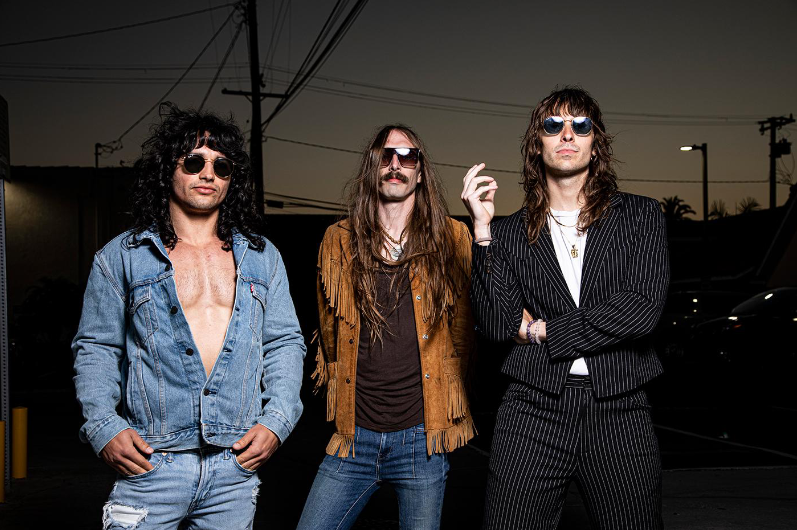
Cinema Stereo: Seb Borysek, Jeff Lageveen, and Ian Rayha. Photo by John Gilhooley.
Shaped From the Past, Built for What’s Next
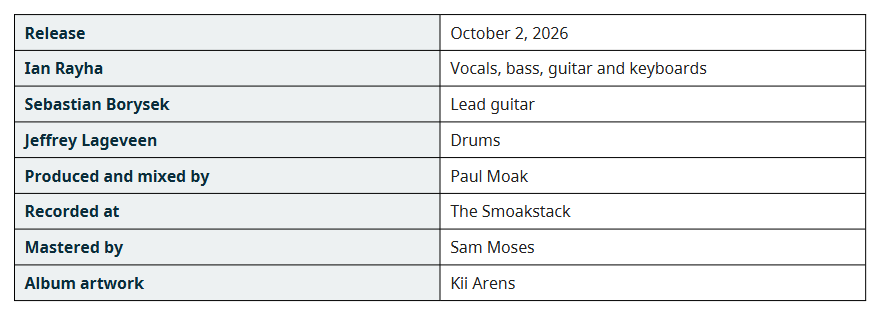
The new album “12:34” is out October 2, 2026, on all platforms.
Chad Cubberly discusses and reviews it for us here.
There are bands you can figure out in thirty seconds. Cinema Stereo is not one of them. Look at the Nashville-based three-piece, and you might expect something straight out of an old rock photograph. Long hair, retro clothes, a little hippie swagger—visually, they could almost wander into the frame beside the Black Crowes. Then the music starts.
Old-school Aerosmith appears in one corner. The Killers seem to have had a conversation with the rhythm section. New-wave slips into Ian Rayha’s phrasing, and the ’90s alternative turns up where you were not expecting it. Then a piano, synthesizer, or strange little studio texture changes the picture again. After spending a day moving between Cinema Stereo’s older material and 12:34, I stopped trying to decide which band they reminded me of. That may be the point. Cinema Stereo openly cites Queen, The Police, Cheap Trick, Aerosmith, and The Killers among their influences. Those records helped shape them. But 12:34 does not sound like three musicians trying to live inside somebody else’s past. It sounds like a band figuring out what parts of that history belong in its future. The songs and production suggest they are further along in that process than the retro image might initially imply.
The Look Fits the Sound
“So Sorry, My Dear” is not actually on 12:34, but I found it included as the official video with the material sent to me for the album, and I am glad I found it. It gives some useful context for where Cinema Stereo is right now. The song carries exactly the tension that makes this band interesting: familiar rock-and-roll instincts pushed through a much more modern frame. Driving rhythm, melodic guitar, big vocals, and an old-school sense of swagger are all there, but the presentation never feels like somebody trying to recreate 1975. The video makes that even clearer. Cinema Stereo understands what they look like. The retro filming, clothes, and three-man rock-band presentation fit the music instead of feeling like costumes placed around it. These look like guys who actually love old records. But the records themselves do not sound old.
The visual says where they came from. The production suggests where they are going. And increasingly, the songs sound like the bridge between the two.
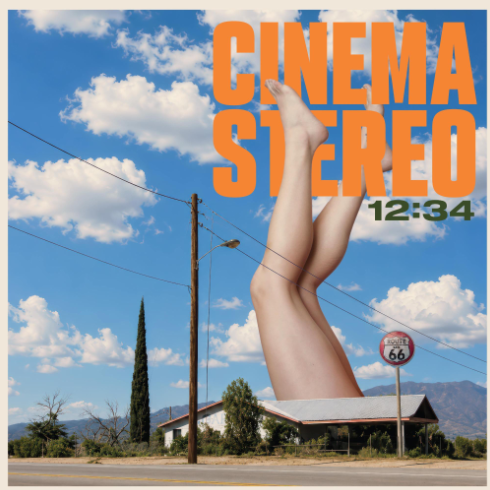
Produced by Paul Moak and recorded at The Smoakstack in Nashville, 12:34 is particularly well mixed. There are a lot of sounds inside these twelve tracks—guitars, keyboards, synths, layered vocals, effects, and little studio noises that appear behind the obvious parts—but the record rarely feels crowded. There is depth without excess. The production gives the band dimension without covering up the fact that there is still a three-piece underneath it.
Several of these songs sound immediately ready for rock radio. The hooks are there. The choruses land. The drums move. The guitars still matter. But Cinema Stereo also leaves enough strange corners in the album—two short instrumentals, an acoustic detour, some unexpected rhythms, and occasional atmospheric passages—to keep “12:34” from becoming too predictable. The band’s own material describes songs dealing with growing up, chasing dreams, relationships, self-doubt, hope, and finding clarity. Listening to the record from beginning to end, I kept coming back to an even simpler idea:
movement.
“Flood” The album begins with somebody who sounds ready to get out.
“Flood” has the feeling of realizing the place you are standing has become too small. I hear, “I have to break out, spread my wings, and find something new feeling underneath it. ” That makes it a strong opener because the song is not simply about escape.
There is curiosity in it. You do not necessarily know what is waiting outside. You just know staying where you are is no longer enough. That feeling becomes important as “12:34” develops. This is a record that keeps moving.
“Over the Edge” Cinema Stereo step on the gas. “Over the Edge” is one of the easiest tracks on the album to feel physically. The shorthand that kept coming to me was The Killers meeting. The Clash—a hard forward pulse with enough indie and punk attitude around it to keep the rock from becoming too polished. Jeff Lageveen’s drums matter here. They do not simply keep time. They push the song. Fast, upbeat, and restless, this is leg-flapping, toe-tapping music. Sometimes analysis can wait.
“Now We Feel Special” This is one of the places where the different generations inside Cinema Stereo begin running together. There is a sharp pop-indie/new-wave character to Ian Rayha’s delivery, while the rhythm underneath it carries the sort of forward stomp associated with The Killers. But what interested me more after repeated listens was the storytelling. There is something Cheap Trick-like about the way Rayha can make a lyric feel conversational. The effect is less about chasing the next chorus and more about making the listener feel as though somebody is actually telling them something. Little processed sounds behind the band modernize the track without taking over. Once again, the video understands the contradiction. They look retro. The song sounds considerably younger.
“A Moment of Feeling Alone” This one retains some of that angular new-wave personality but gives the guitar more space. I could reach for another band comparison here, but the more interesting thing is what Cinema Stereo does not play. There are breaks where the arrangement opens and gives the lyric room to sit for a moment. I like that. Young bands sometimes seem frightened of empty space, as though every second needs another sound. Cinema Stereo are beginning to understand that silence and restraint can become part of an arrangement too.
Sometimes the best thing a band can add is nothing. Those little gaps give the listener time to think before the song moves again.
“12:34” Then the album changes shape completely. The title track is a short instrumental—barely more than a minute—but it creates one of the clearest pictures on the record. Piano and atmospheric, almost symphonic sounds begin flowing underneath it. I picture movement. Air passing quickly. Something below you is disappearing into the distance. Almost like flying over a landscape. Then the drums arrive. For a brief moment, this quiet little instrumental becomes triumphant. It rises. It opens. And instead of forcing itself into a conventional song, it simply settles and fades. I am not sure a one-minute instrumental needs much more explanation than that. It does exactly what it needs to do.
“Expectations.” “Expectations” puts the feet back on the ground. This one thumps. There is some old-fashioned rock muscle underneath the riff, but the thing that grabbed me most is the direction. The song feels as though it is headed somewhere. There is a difference between hoping your life changes and actually moving toward the change. “Expectations” sounds like the latter. It pushes forward with purpose. There is almost a feeling of arrival in it—not somebody who suddenly has everything figured out, but somebody who has finally stopped standing still. That makes it one of the strongest immediate tracks on the album. It also gets close to the larger story of 12:34.
“Ride to the Sun” gave me another useful reference point for something I had been hearing throughout the record: Weezer. Not the heavier side.
More the melodic, slightly mellow alternative-rock side where a guitar tone, vocal phrasing, and a simple hook can carry quite a bit of emotional weight. That ’90s alternative quality helps explain why Cinema Stereo can be difficult to place in one era. They might begin with classic-rock instincts, pull some new-wave phrasing into the vocal, and then wrap everything in production that belongs comfortably in 2026. It sounds complicated when written down. It does not sound complicated coming through the speakers. That is a good sign.
“Flowers” lets the album exhale. The acoustic arrangement immediately changes the temperature. There is an easy rhythmic warmth here, but the comparison that stayed with me was Blind Melon. Something about the song takes me toward the easy acoustic movement of “No Rain.” Not imitation. Feeling sunny but slightly strange. Relaxed without being empty. That little ’90s alternative personality underneath an acoustic song that could otherwise have come from decades earlier is another good example of what Cinema Stereo is doing throughout 12:34. Different periods of music are starting to live inside the same song.
“Lean On You.” This one goes straight back to the old record collection. And it is fun. “Lean On You” has a loose, throwback, almost hippie-rock character that immediately brought old-school Aerosmith to mind. The vocal texture and general swagger keep the track loose rather than overly polished. The backbeat and slightly echoing PA quality around parts of the vocal add to that live-rock feel. But eventually I stopped wanting to compare it to anybody. The simpler description works better: It sounds like three guys enjoying being in a rock band. The production is contemporary. The bones are old-fashioned rock and roll. Cinema Stereo does not have to apologize for that. The past does not become a problem until a band has nowhere else to go. These guys clearly do.
“All I Want.” This may be the strangest rhythmic combination on the album. There is a looseness in places that brushes against something almost Jamaican or ska-like without actually becoming reggae. The admittedly strange comparison that kept popping into my head was Sublime meets Tesla. And somehow I still stand by it. The groove may be unusual, but underneath it is something much more familiar. I hear two people trying to negotiate the distance between what may be sensible and what they actually want. Maybe staying apart is easier. Maybe there are good reasons not to go back. Maybe both people know all of that. But underneath the reasoning is a much simpler declaration: What I want is you. The closer the song gets to admitting that, the less complicated everything becomes.
“Tears” The album’s second instrumental works almost opposite to the first. “12:34” moves. “Tears” waits. There is a much more cinematic atmosphere here. This is one place where Pink Floyd feels like a genuinely useful reference—particularly the spacious, slowly developing side of the band rather than the obvious radio songs. The title probably influences the picture in my head. But it works. Tears build. You often feel them coming before they arrive. Then eventually whatever has been held back breaks. And eventually that passes too. “Tears” follows something like that emotional shape. It holds the listener in suspension. Sometimes waiting becomes its own form of movement.
“Proxima” And Cinema Stereo may have saved my favorite for last. “Proxima” has some excellent guitar work, but the guitar matters because of what it does for the song rather than because somebody wants to prove they can play.
The riff complements the emotion. The whole track gives me a take-me-away feeling. Somewhere different. Somewhere better. But not somewhere that requires pretending to be somebody else. Underneath it, I hear something almost like, “I do not want to become something I am not just to get where I am going.” And after an album full of old influences, modern production, experimentation, and different versions of what Cinema Stereo can sound like, that feels like exactly the right ending. “Flood” begins by wanting out. “Proxima” sounds closer to knowing where you want to go without losing who you are on the way there. That is 12:34 in miniature.

Where the Past Goes Next: Influence is not the story. What a band does with it is. Cinema Stereo clearly knows their rock history, but 12:34 is strongest when those references stop arriving one at a time and start functioning as one musical vocabulary. That is where Paul Moak’s production matters. Seb Borysek’s guitar steps forward when a song needs it and disappears behind the arrangement when it does not. Jeff Lageveen frequently supplies the momentum. Ian Rayha moves between straightforward rock singing, indie phrasing, and conversational storytelling without locking himself into one delivery. The studio gives all three dimensions without sanding away the band underneath. 12:34 is polished without becoming sterile, accessible without becoming entirely predictable, and retro without becoming trapped in nostalgia. “Now We Feel Special,” “Expectations,” and “Lean On You” are obvious entry points, but the less obvious moments may say even more about where the band can go: the instrumentals, the acoustic turn in “Flowers,” the strange rhythm of “All I Want,” and the open spaces inside “A Moment of Feeling Alone.”
Cinema Stereo is still growing, but this does not sound like a band asking people to wait patiently while they learn how to make a good record. The sound is there. The production is there. Most importantly, the songs are there. Years ago, Cinema Stereo had a song called “Ride This Thing Out.” That title feels pretty appropriate now. 12:34 sounds like a band doing exactly that. Only the direction has become much clearer.

Love what we do? Rock the Joint Magazine is completely free—no paywalls, no ads ruining the read—just passionate music journalism for 1,000+ readers a day. If you enjoy hanging out with us, please consider hitting the “Support Us” button and buying us a coffee on Ko-Fi. Even a small donation genuinely helps keep the magazine running, lets us publish more features, and reminds us that people value independent music writing. Remember, I work hard for you here!
Stream music from Cinema Stereo Here
Band Website here
Review By Chad Cubberly

JOIN ROCK THE JOINT MAGAZINE ON A JOURNEY FOR THE BEST IN INDEPENDENT MUSIC JOURNALISM—WE COVER ROCK, COUNTRY, JAZZ, AND CHRISTIAN MUSIC. LEADING FEATURES, INTERVIEWS, REVIEWS, AND EDITORIALS. SUPPORT US ON KO-FI.