
One of the things we say about Rock the Joint Magazine is that we cover Rock, Country, Pop and Jazz. Five years on, however, our jazz coverage remains, sadly, a little behind the rest. So it’s with considerable enthusiasm that I’ve picked up an impending jazz release from our email submissions. Baby Blue has wandered in to the office, as he often does, and apparently fancies a little smooth jazz too. Let’s see what awaits us!
The Artist
Vocalist and songwriter Irene Serra has spent more than two decades developing a distinctive place within the UK’s contemporary music scene. ISQ is her original compositional project, bringing together sophisticated jazz musicianship, alternative pop sensibilities and rich electronic textures.
The current line-up features Richard Sadler on bass, Chris Nickolls on drums and electronics, and Luca Boscagin on guitar. Between them, the musicians bring experience across jazz, improvisation and contemporary music, with credits including the Neil Cowley Trio, Andy Sheppard and Cinematic Orchestra.
ISQ’s previous releases have attracted critical praise, including Too, named a Time Out London Critics’ Choice, and Requiem for the Faithful, which received recognition from Clash Magazine. This fifth studio album arrives after an eight-year gap, shaped by the personal experiences and world events that have changed Irene’s outlook.
As Irene explains:
“The songs on this album were a long time in the making. Much has changed since the last ISQ release eight years ago, as both world events and personal experiences have profoundly shaken, reshaped and, at times, strengthened my outlook. This album is my attempt to make sense of a shifting world and of the elusive human condition — its unexpected beauty and moments of light, alongside the sadness and the quiet, everyday violence it contains.”
That’s quite an ambition for an album, but let’s see where the music takes us.
The album is scheduled for release on 23 October 2026.
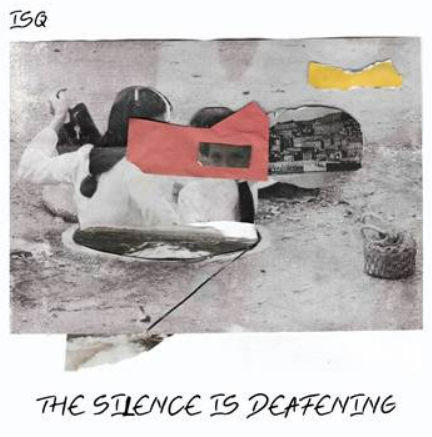
My Review
“On Shoulders of Giants”
“On Shoulders of Giants” is an immediately engaging opening track, turning our attention towards the coming winter with lyrics full of crunchy snow boots and the night sky. There’s something conversational about the delivery from the outset, while an uplifting chorus and the arrival of harmony vocals transform the track, allowing it to take flight.
The music sails through its changes with a deceptive, almost frictionless ease. It’s a lovely introduction to this jazz-infused pop sound, and one that immediately put me in a happier frame of mind. There’s a warmth here that makes the prospect of winter seem considerably more inviting.
“Faded”
With “Faded”, we begin to move into the more introspective territory of the album. There’s a touch of funk in the rhythm at times, but lyrically the song deals in scraps and bones, examining the damage that can be done to the self within a destructive relationship.
The mood is one of reflection and gradual decay, with the imagery of falling autumn leaves providing an apt backdrop. Where the opening track offered a sense of lift and possibility, this one looks at what happens when something begins to fall apart.
It’s a more sombre moment, and an important shift in the album’s emotional direction.
“No Time at All”
“No Time at All” sweeps in with a late-night, low-lit intimacy. It feels as though the music is being performed in the corner of a smoky room, close enough for us to appreciate the smallest details in the vocal delivery and arrangement.
The song connects with the idea that time spent with family, and the growing realisation that quality time is what we should really be chasing, can become increasingly important as life unfolds.
This is one of those tracks that could easily be overlooked when listening to an album as a whole, yet it holds many of the ideas Irene is exploring. There’s no need for a grand musical gesture here. The intimacy is the point, and the song allows its thoughts to settle naturally.
“Kindred Spirit”
“Kindred Spirit” carries a particularly interesting story. The song was shaped by ISQ’s mother’s journey from southern Sicily to Denmark in the early 1980s, alongside the story of Carola Rackete, the rescue-boat captain arrested after bringing migrants safely ashore.
It’s a subject that feels especially relevant at a time when migration, borders and the movement of people between nations remain fiercely debated.
The lyrics reflect on the experience of strangers, language and movement, but one of the most interesting elements is the use of vocal rhythms. It’s not simply about the words themselves; the patterns and sounds of speech become part of the music, suggesting how we communicate and find our place even when language presents a barrier.
At 5 minutes and 55 seconds, the track has room to breathe and explore. Rather than rushing towards a conclusion, it allows its ideas to develop within the music, creating space for reflection. It’s a fascinating example of storytelling through both words and sound.
“Animal”
“Animal”, the album’s lead single, offers another perspective on the journey explored in “Kindred Spirit”, this time turning towards the daughter’s experience.
There’s a late-evening, commercial jazz-radio feeling to the track, making it something to relax into as the story unfolds. The mother-daughter relationship and the experience of making a life in new surroundings remain central, but the change in perspective adds another layer to the narrative.
After all, we’re all shaped, to some extent, by the decisions our parents make before we even have a say in the matter. We inherit histories, circumstances and consequences, and then have to work out what to do with them.
The song offers a thoughtful continuation of the album’s exploration of family, identity and the ties that connect generations.
“Lady Death”
“Lady Death” is something of a sonic outlier on the album, and it’s a track I enjoyed quite a lot.
There’s a darker, almost voodoo-jazz quality to the sound, with the music exploring perspectives on love and relationships from a more shadowy corner. Instrumentally, it’s particularly interesting, creating something of a musical montage in which different textures and sounds are allowed to collide and interact.
The drums are especially effective, slipping neatly into the footsteps and atmosphere of the piece. It’s a track that demonstrates the band’s willingness to move beyond the more familiar jazz-pop territory and explore something a little stranger.
I rather like that sense of unpredictability. An album doesn’t need to keep every track within the same musical boundaries, and this one benefits from taking a walk on the darker side.
“Angela”
“Angela” is a troubling track, and deliberately so.
The song draws on the Ask for Angela campaign, a UK safeguarding initiative launched in 2016 that allows people who feel unsafe, threatened or uncomfortable on a date or night out to discreetly ask venue staff for help by using the name “Angela”.
It’s an important subject, and the song approaches it through a slowly swaying musical arrangement that carries a deeply personal sadness. There is a sense of something terrible happening just beyond the edges of what people are willing to acknowledge.
The image that stayed with me is the suggestion that we pretend not to notice the bruise on her face. It’s a painfully effective observation about the way abuse can remain hidden in plain sight, particularly when people choose not to ask questions or intervene.
As October draws towards its close and winter approaches, this is a sombre story to encounter, but one that deserves to be told. The music doesn’t need to shout to make its point. The quietness makes the sadness all the more affecting.
“She Walks Through Fire”
“She Walks Through Fire” brings the album to a close, and it feels like a fitting place to leave the listener.
Jazz has always had room for the lyrical, the conversational and the gentle exchange between musicians. Here, those qualities combine to create something that feels like a boat drifting with serenity across a much more turbulent sea.
After an album that has explored difficult relationships, family histories, migration, personal damage and the darker aspects of human behaviour, there’s something welcome about this closing sense of movement and calm.
It doesn’t necessarily suggest that all the storms have passed. Rather, there’s a feeling of continuing the journey, carrying what has happened with us while finding a way to move forward.
It’s a quietly reflective ending to a thoughtful collection of songs.
This is an album that rewards patience, revealing its ideas through atmosphere, storytelling and the subtle interplay between jazz, alternative pop and electronic textures. Irene Serra and ISQ move confidently between warmth and unease, exploring family, migration, relationships and the quieter forms of human suffering without losing sight of life’s moments of beauty. There are individual tracks that stand out, but the greater achievement lies in the way the songs speak to one another, building a picture of a complicated world and the people trying to find their way through it. Jazz may still be playing catch-up in our magazine, but releases like this are a very good reason to give it more room. Baby Blue, for his part, has remained in the room throughout — which I’ll take as a positive review!
*
Love what we do? Rock the Joint Magazine is completely free — no paywalls, no ads ruining the read — just passionate music journalism for 1,000+ readers a day. If you enjoy hanging out with us, please consider hitting the “Support Us” button and buying us a coffee on Ko-Fi. Even a small donation genuinely helps keep the magazine running, lets us publish more features, and reminds us that people value independent music writing. Remember, we work hard for you here!
You can stream music from ISQ here
By Mark C. Chambers

Join Rock the Joint Magazine on the road to the best independent music journalism, interviews and reviews. We cover Rock, Country, Jazz, Blues and Christian music. Support us on Ko-Fi (link on each page) to help the magazine grow and value independent journalism.
